




The Gurgitello spring, rising through layers of green tuff beneath Casamicciola Terme, feeds the pools at what is now called Palazzo Manzi Terme & Spa – the Terme Manzi Hotel & Spa Ischia under its historic name – and has been supplying mineral water to this corner of the island since Roman times. More than a hundred individual springs surface across Ischia, most heated by the same volcanic processes that built Monte Epomeo, the island’s dominant peak, over 150,000 years of eruption. The water moves through rock of unusual density and mineral content, arriving already rich before it reaches the skin.
A trip to Ischia runs better if you treat the thermal infrastructure as the main event rather than a hotel amenity. The island holds a landscape of public thermal parks, volcanic beaches, medieval fortresses, and small towns that remain largely Italian in character even at the height of summer. This guide focuses on the northwest arc from Casamicciola through Lacco Ameno to Forio, where most of the thermal lodging and the island’s largest parks concentrate – alongside notes on the Aragonese fortress at Ischia Ponte, the volcanic southern coast at Sant’Angelo, and the composer William Walton’s garden near Forio.
At a glance: 
- Best season: May and June for warm weather without August crowds; September and October for thermae with fewer visitors and La Mortella Gardens still open.
- How to arrive: Fly to Naples Capodichino, then take the metro or taxi to Molo Beverello and board an Alilauro or SNAV hydrofoil to Ischia Porto or Casamicciola (around 60-70 minutes). Conventional ferries from Calata Porta di Massa take roughly 90 minutes.
- How long to stay: Four to five days minimum to move between thermal parks, towns, and hiking trails without rushing.
- Who it’s for: Travelers who want thermal bathing with geological and historical context, not just a pool afternoon.
- Don’t expect: Capri’s boutique density, English menus across the island, or a car-free experience outside Sant’Angelo.
Why Ischia

The Greeks who settled this island in the 8th century BC – the Euboeans who founded their colony at Pithecusa, the site now marked by the town of Lacco Ameno – knew the springs were useful before they theorized why. Archaeological finds from that settlement, housed in the Museum of Villa Arbusto in Lacco Ameno, show the colony’s proximity to thermal sources. The Romans later institutionalized this knowledge, building public thermae fed by the Nitrodi spring in Barano and other sources across the island.
The underlying geology explains why. Ischia was formed from volcanic rock around the eruption and cooling of Monte Epomeo, with the oldest volcanic materials dating back 150,000 years. Groundwater percolating down through these layers absorbs calcium, magnesium, sodium bicarbonate, and silica before returning to the surface heated and filtered through green tuff – a volcanic material, notable for its mineral-holding properties. The result is 103 individual springs across 29 distinct groups, ranging from mildly mineralized drinking waters to fumarolic vents that push steam directly through the sand at Le Fumarole beach near Sant’Angelo.
For most of its history the island used this infrastructure practically. The 20th-century hotel industry built around it, and the thermal tradition now holds both forms at once: public bathing parks with day tickets and five-star spa hotels built on specific named springs, often drawing from the same volcanic circuit. The impulse to organize a destination around named thermal springs is old and not unique to Ischia – our piece on Hot Springs, the original American spa town, traces the same pattern through an entirely different geology.
The Land
Ischia sits at the northern end of the Gulf of Naples, roughly 33 kilometers west of the city. The island covers about 23 square kilometers, organized around six municipalities: Ischia Porto and Ischia Ponte on the east, Casamicciola Terme on the north, Lacco Ameno and Forio along the northwest coast, Serrara Fontana in the interior south, and Barano on the southeast. Ferries arrive at three ports – Ischia Porto, Casamicciola, and Forio – making it possible to arrive near wherever you’re staying.
The northwest arc from Casamicciola through Lacco Ameno to Forio holds most of the island’s thermal hotels and largest public parks. This stretch is where the Gurgitello spring and the Negombo and Poseidon park clusters concentrate. Roads are narrow and the topography rises quickly toward Monte Epomeo (789 meters). Moving between towns by scooter or taxi is faster than the bus in season. The southern coast – particularly Sant’Angelo and the long Maronti beach – operates at a different pace. Sant’Angelo is car-free, reached on foot along the coastal path from Maronti or by water taxi. The terrain there turns volcanic and dark, with thermal vents steaming visibly from the shore.
What to Do
Negombo Thermal Gardens. San Montano Bay in Lacco Ameno holds twelve thermal pools set within a landscape of 500 plant varieties, each pool maintained at a different temperature – from 24°C in the main pools up to 38°C in the Japanese Labyrinth Bath, a dual-channel system designed to alternate thermal and cold exposure. A 33-meter seawater pool faces the bay; the private beach is included for park guests. The Trattoria Casa Colonica on site is one of the island’s most recommended restaurants and does not require park entry for lunch. Open approximately April to early October; advance booking advisable in August.
La Mortella Gardens. The English composer William Walton and his Argentine wife Susana created this garden near Forio beginning in the 1950s, working with landscape architect Russell Page to terrace a hillside into a sequence of ponds, fountains, rare subtropical plants, and volcanic rock formations. Walton composed here for 35 years; the foundation he and Susana established now supports young musicians and hosts chamber concerts in the Recital Hall on Saturdays and Sundays in spring and autumn, and a summer orchestral festival in the Greek Theatre on Thursday evenings in June and July. Open April 2 to November 1, Tuesday, Thursday, Saturday, and Sunday from 9am to 7pm.
Le Fumarole and Sant’Angelo. The coastal path from Maronti beach south to Sant’Angelo passes Le Fumarole, where volcanic steam rises from vents in the sand at temperatures high enough to cook in. Locals have buried clay pots here for generations, slow-cooking food in the earth over hours. Sant’Angelo itself sits on a narrow peninsula connected to the main island by a sandbar: no cars enter. The village has a quiet thermal scene, a handful of restaurants, and fishing boats. Access is on foot from Maronti or by water taxi from Ischia Porto.
Castello Aragonese. The fortress on its own islet off Ischia Ponte, connected by a 220-meter stone bridge, traces its origins to 474 BC, when the Syracusan ruler Hiero I built the first defensive structure on the rock. The Aragonese configuration dates to the 15th century; at its peak, the castle housed a self-contained community of nobles, nuns, and craftspeople. Today the interior holds the ruins of a Romanesque cathedral, a crypt, an enoteca near the summit, and views across the gulf – Vesuvius to the east, Procida to the northwest, and the Amalfi coast to the south on clear days. Allow two to three hours.
Monte Epomeo. The island’s highest point is reached by trail from Fontana, where the road ends. The ascent covers roughly 3.5 kilometers of exposed tuff path and takes about 90 minutes on foot. At the summit, two hermit chapels were cut directly into the green tuff; a small refuge serves wine and food. The panorama takes in the full island and the Bay of Naples; Vesuvius rises to the east, the Ponza archipelago to the northwest. Horses can be hired in Fontana for the climb.
Where to Stay
Palazzo Manzi Terme & Spa
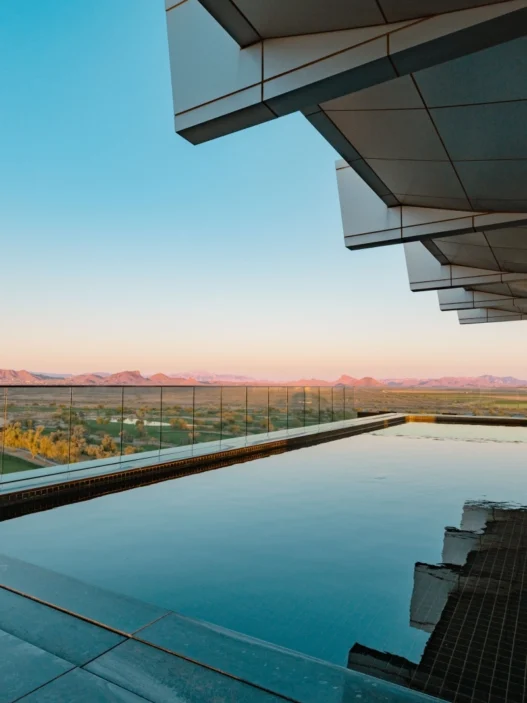
The pool at the center of this property draws directly from the Gurgitello spring beneath the building – the same Roman-era source around which Casamicciola Terme organized itself. Built on Piazza Bagni di Gurgitello, Palazzo Manzi Terme & Spa (operating for much of its history under the name Terme Manzi Hotel & Spa Ischia) positions itself as a thermal institution more than a design hotel: 1,600 square meters of spa built on its named source, offering Gurgitiello Method programs that combine thermal treatments with nutrition and fitness protocols tailored to individual guests. Rooms run from Classic through Suites, with Vietri tile work and Mediterranean palette throughout; Gli Ulivi restaurant serves Campanian and island cooking. Premium by the island’s thermal-hotel standard.
Mezzatorre Hotel & Thermal Spa
The watchtower on the northwestern promontory was built by the Aragonese in the 16th century, later developed by the Dukes of Rancidello, and transformed into a cultural gathering point by the intellectual Luigi Patalano in the 1930s. Pellicano Hotels Group manages the property now, under Marie-Louise Sciò’s creative direction. Seven hectares of park surround the building, with walking trails, thermal pools fed by the island’s volcanic water, and a private bay below. Truman Capote, who visited, called it “a strangely enchanted place.” Rooms range from the tower itself to cottages set into the hillside; Ristorante La Torre and La Baia anchor the dining. Season runs April 2 to October 26. Ultra-luxury, among the most expensive properties in the Gulf of Naples.
Botania Relais & Spa
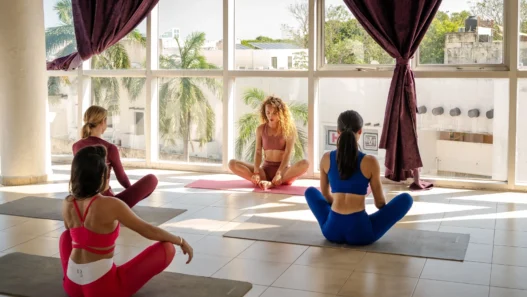
Between Forio and Lacco Ameno on Via Provinciale Lacco, Botania Relais & Spa occupies three hectares of hillside farmland organized around ten white maisons in traditional Ischian vernacular. The farm on the property supplies 70% of the kitchen’s needs – Farmer Franchino manages the cultivation – and the Il Mirto restaurant holds a Michelin Green Star for its sustainability approach. Thermal pools use spring water; morning yoga runs from mid-May through September; the park holds centuries-old olive trees and herb gardens accessible barefoot. Adults and children over 12 only. Upper-premium, with the organic dining program as the clearest differentiator from other properties in its tier.
Regina Isabella – Resort Spa Restaurant
Angelo Rizzoli – the Milan publishing magnate who built Mondadori and produced films for Fellini and De Sica – chose Lacco Ameno as his personal base on Ischia and built the Regina Isabella here in the 1950s. Designed from the start as a full-service grand thermal resort, it still operates at that scale: four pools, private beach, two jetties, tennis, and a spa, with the Indaco restaurant (Michelin-starred) anchoring the dining program. The building’s mid-century proportions read as historical substance rather than dated excess. Mid-range by the island’s upper tier, and the most historically grounded option in Lacco Ameno.
Where to Eat
Trattoria Casa Colonica del Negombo. Inside the Negombo thermal park in San Montano Bay but accessible without purchasing park entry. The kitchen centers on Ischia’s fishing and farming traditions: grilled fish, pasta with local clams, coniglio all’ischitana (island rabbit slow-cooked with tomato, capers, and herbs in terracotta). The terrace overlooks the thermal pools and the bay. Booking advisable in July and August.
Saturnino. In central Forio, Saturnino has operated for over fifty years; the kitchen is now in the hands of Chef Antonio Mazzella. The menu runs from coniglio all’ischitana through fresh pasta with island vegetables and whole-fish preparations. The wine list focuses on Ischian Biancolella, the native white grown on near-vertical coastal slopes. Reservations recommended for dinner in high season.
Cantine Pietratorcia. The Pietratorcia winery produces Biancolella and Forastera from vineyards above Forio; the attached restaurant pairs seasonal plates with estate wine in a stone-and-wood interior. A wine-led lunch rather than a full dinner restaurant – the context of tasting wine where it was grown makes the case more efficiently than the menu alone. The Panza location holds the original estate; the Forio location is more accessible on foot.
Practical Notes
Getting there: Naples Capodichino is the nearest airport. Metro Line 1 (Municipio stop) connects the central station to the Molo Beverello port. Alilauro, SNAV, and Caremar run hydrofoils from Molo Beverello to Ischia Porto and Casamicciola in 60-70 minutes. Conventional ferries from Calata Porta di Massa (a 15-minute walk east of Molo Beverello) take roughly 90 minutes. Pozzuoli ferries are an option from the northern Naples area. On the island, scooter rental or taxis are faster than the bus network for moving between towns.
When to go: May, June, September, and early October offer the best balance of open parks, warm weather, and manageable numbers. August brings Italian summer demand at full force. Most thermal hotels operate April through October only; La Mortella Gardens closes November 1. Some smaller restaurants and shops close January through March.
Etiquette and access: Water shoes are practical at Sorgeto Bay and Le Fumarole, where volcanic vents heat the sea and sand directly. At Negombo and most thermal parks, bringing a towel reduces the entry cost. The Negombo day-ticket price and ferry fare remain the two most accessible price points on an otherwise premium island.
How many days do you need in Ischia?
Four to five days is the practical minimum to cover the northwest thermal arc, reach Sant’Angelo in the south, and have unhurried time in at least two or three parks or natural springs. A long weekend concentrated on the Casamicciola-to-Forio stretch works for a thermal-first trip. A full week allows time for Monte Epomeo, La Mortella, and the castle at Ischia Ponte without any day feeling pressed.
Is Terme Manzi Hotel & Spa Ischia worth visiting for the thermal experience?
The Terme Manzi Hotel & Spa Ischia, now operating as Palazzo Manzi Terme & Spa, builds its offer around the Gurgitello spring beneath the building: 1,600 square meters of spa drawing from that specific source, with programs integrating thermal bathing, nutrition, and fitness protocols. For travelers who want a spa rooted in a named volcanic spring rather than a general wellness facility, it is the most directly thermal choice on the island. The spa and pools are reserved for hotel guests; day-entry is not available.
Can you visit Ischia’s thermal springs without a hotel booking?
Yes. Negombo Thermal Gardens in Lacco Ameno and Poseidon Thermal Gardens in Forio both operate on day-entry tickets with no hotel requirement. The Sorgeto hot springs on the southern coast are free, accessible by a short stair path from the road or by water taxi from Sant’Angelo. Le Fumarole beach near Sant’Angelo is public shore with natural volcanic vents. Most visitors who combine a non-thermal hotel with day tickets find the island’s full thermal range easily within reach.
Late afternoon in the Gurgitello pool: the water holds around 30 degrees Celsius, the light drops behind Monte Epomeo, and the town of Casamicciola makes its evening sounds – a bus, a dog, someone on a scooter. There is nothing to see from the pool except the sky. After an hour, the body stops registering temperature. This is what Ischia offers that design cannot replicate: ground-sourced heat, delivered by geology, running whether anyone is in it or not.