





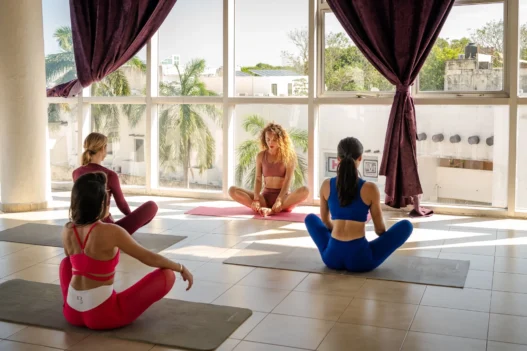
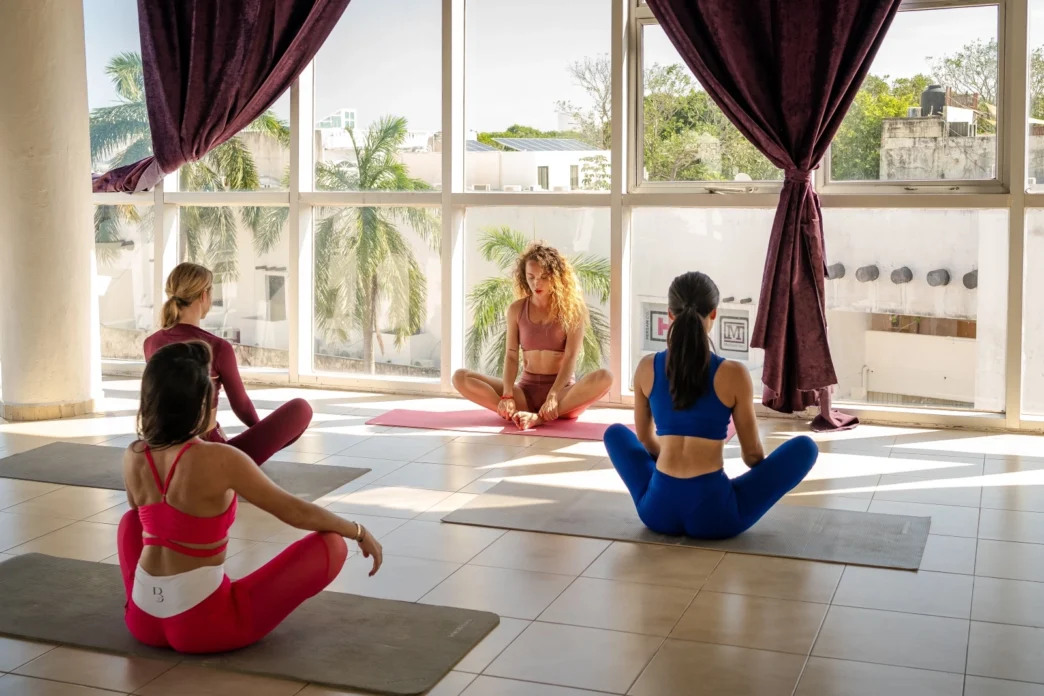
Puerto Rico compresses more geographic variety into 110 miles than most Caribbean destinations manage in a full archipelago. The island’s yoga retreat landscape reflects that range. The karst limestone country of Utuado’s interior – with its haystack hills, underground rivers, and former coffee plantations – produces a different practice environment than the volcanic terrain of Vieques island, or the cloud-and-canopy conditions that the El Yunque rainforest generates near the east coast. The dry forest reserve along the southwestern coast, the surf beaches of Rincón – these are not interchangeable backdrops. The five properties here were chosen for geographic spread first and for genuine practice programming second, on the basis that a yoga retreat whose setting is incidental to the experience it delivers is, in most cases, a resort with yoga on the activities menu.
Getting to Puerto Rico requires no passport for US citizens, and nonstop flights connect San Juan’s Luis Muñoz Marín International Airport from most major US cities in under four hours. The flight from Miami or Tampa runs under three hours, making the island a practical extension for anyone already in Florida’s orbit; for context on what the eastern US yoga retreat circuit offers by comparison, Florida’s own yoga retreat landscape covers the nearest end of it. From San Juan, the properties here spread in every direction: offshore to Vieques, west through the mountains to Utuado, east to the El Yunque region, southwest along the coast to Guánica, and around to Rincón on the west shore.
The shortlist: 
- Best for Ayurvedic programming on an offshore island: Finca Victoria, Vieques
- Best for yoga in the karst mountain interior at an accessible rate: Casa Grande Mountain Retreat, Utuado
- Best for all-inclusive yoga and nature immersion near El Yunque: Casa Alternavida, Río Grande
- Best for sunrise and sunset yoga on the dry southwestern coast: Copamarina Beach Resort & Spa, Guánica
- Best for a hosted group retreat on the surf coast: Maria’s Beach, Rincón
Finca Victoria, Vieques
Finca Victoria is an Ayurvedic boutique hotel and retreat center on Vieques – the small island municipality east of the Puerto Rico mainland, reached by a 10-minute flight from Ceiba or by ferry. The property sits on the island’s highest point, a position that gives the Maloka – the open-air deck where daily yoga is held – an unobstructed ocean view in three directions. The coquí chorus that defines the island’s ambient sound before sunrise is audible from the practice space before the class begins.
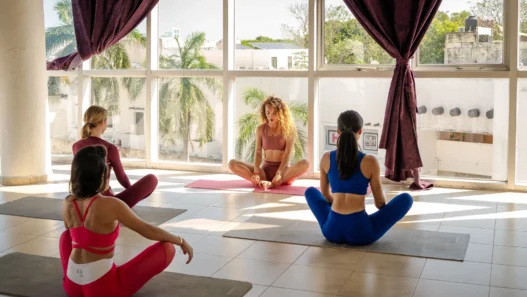
Daily complimentary group yoga runs at 8 AM AST and follows a consistent two-part structure: the first thirty minutes move through breathwork and a beginner-to-intermediate warm-up, the second thirty minutes engage an active vinyasa flow, and the class closes with a singing bowl during Savasana. The session is also live-streamed daily on Zoom for guests not on-property – an unusual extension for a property of this type. Beyond the daily class, Finca Victoria runs Group Panchakarma programs four times a year, following the classical Ayurvedic purification protocol under the guidance of practitioners working with the retreat’s spa. Readers unfamiliar with what a clinical Ayurvedic program involves before committing to one will find context in the broader examination of Ayurveda retreats published here. A Yoga Residency program offers visiting teachers the opportunity to run their own retreats at the property.
The property’s 14 accommodations include treehouses, Victoria suites, stand-alone cabins, a vintage Airstream, and the Victoria Residence. All include equipped kitchens stocked with Ayurvedic spices and oils, outdoor showers, and either a hammock or terrace facing the view. The spa occupies a private bamboo-tree cabin and offers Ayurvedic therapies, Western massages, and Chinese medicine treatments using organic in-house products. A vegan Ayurvedic breakfast is served daily at the Pavilion from 8:30 to 10:30 AM following the yoga session. Finca Victoria was founded by Sylvia De Marco, a Puerto Rican native – a provenance that gives the property’s roots-in-the-island framing something to stand on beyond marketing language. Mid-to-upper range for Vieques, with Panchakarma programs and residency options available for longer commitments.
Casa Grande Mountain Retreat, Utuado
The karst country of Utuado – the limestone haystack hills, sinkholes, and forested ridges of Puerto Rico’s interior – is not where most travelers to the island end up. That is, largely, why Casa Grande Mountain Retreat works the way it does. The property sits on 105 acres of a former coffee plantation at Kilometer 0.3 of Carr. 612 in the Caonillas Abajo sector, with the Río Caonillas marking the lower boundary of the land and multiple waterfalls reachable by the trails the property maintains.
The 20 rooms are built on the mountainside, each with an en-suite bathroom and a private porch with a hammock facing the valley. A fully equipped yoga center is available for individual practice throughout the day and for the retreat programs that visiting teachers run here on a hosted basis – the events calendar shows active programs through the end of 2026, including yoga, mindfulness, and healing retreats led by outside instructors. The farm-to-table restaurant draws on produce from the broader agricultural landscape that this part of the interior supports. A saltwater pool and 45-plus minutes of maintained hiking trails round out the activity roster, with rock-jumping at the river listed for those whose engagement with the landscape goes beyond the mat.
National Geographic Traveler, New York Magazine’s travel edition, and Lonely Planet have all covered the property. The price point is genuinely accessible by retreat standards – the combination of the karst landscape, the visiting-teacher calendar, and the river access makes Casa Grande a useful option for travelers for whom yoga is one of several reasons to visit rather than the single organizing principle of the trip.
Casa Alternavida, Río Grande
Casa Alternavida sits at Kilometer 0.87 of PR 968 in Río Grande, close enough to El Yunque – the only tropical rainforest in the US National Forest system – that the canopy and the conditions it produces are present in the daily experience without requiring an organized excursion to access them. Yancy Wright founded the property in 2012 after her own burnout, and the programming here is shaped by that origin in a way that is legible in the structure: the format is all-inclusive, the schedule is held, and the daily nature outings adjust to weather and guest composition rather than following a fixed route.
Morning yoga takes place on the rooftop, where the aspect spans both ocean and mountains simultaneously – a positioning uncommon for a property that is neither coastal resort nor mountain lodge. All meals are gluten-free, sugar-free, and dairy-free. Optional additions include personal coaching sessions, massage treatments, cacao ceremonies, and fire ceremonies. The retreat runs formats for solo travelers, corporate leadership groups, and hosted retreats where visiting practitioners bring their own participants – an operational range that keeps the property’s schedule active across a broad span of the year.
TIME named Casa Alternavida to its World’s Greatest Places list in 2023. Travel + Leisure, AFAR, and Thrillist have since covered it. The all-inclusive pricing encompasses accommodation, meals, daily yoga, and guided nature outings; massage and ceremonial add-ons are priced separately. Mid-to-upper range for an all-inclusive format in Puerto Rico; the combination of the El Yunque proximity and the structured daily program distinguishes it from properties that use Caribbean nature as scenery rather than as a program component.
Copamarina Beach Resort & Spa, Guánica
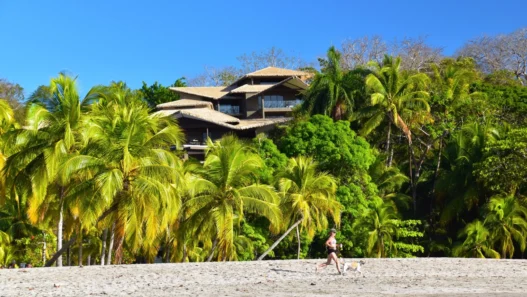
Guánica’s southwestern coast is the driest part of Puerto Rico – a climatic inversion from the rainforest conditions the island’s east coast receives – and the Bosque Seco dry forest reserve adjacent to Copamarina provides the ecological context for what distinguishes this stretch of shoreline from the developed beach resort corridors elsewhere on the island. The resort’s 20 acres of tropical gardens sit directly on the Caribbean Sea at Kilometer 6.5 of PR-333, and the combination of the reserve’s hiking trails and the calm, clear water of the southwestern bay creates an environment well suited to the sunrise and sunset yoga classes the property runs.
Copamarina is an independently operated beachfront resort – not affiliated with a chain or international hotel group – which, at the price point where it sits, is worth noting. The Ni Spa offers massage and treatment services on-property. Activities extend into the Bosque Seco through kayaking in the mangrove channels and diving in the clear southwestern water that the reserve’s protected status helps maintain. Multiple room categories range from garden-view rooms to oceanfront luxury villas, giving the property flexibility for different group sizes and travel styles.
For a traveler whose yoga practice works best alongside open-water swimming, snorkeling, or dry-forest walking rather than inside a dedicated retreat schedule, Copamarina provides a base where those elements coexist. Mid-range for a beachfront Caribbean resort at this location; the sunset class on the water’s edge at the end of a day in the reserve is the argument for including it alongside the more explicitly retreat-focused properties on this list.
Maria’s Beach, Rincón
Rincón sits on Puerto Rico’s west coast and has operated as the island’s surf center for decades. It is also, increasingly, where yoga instructors bring groups looking for a combination of daily practice and access to surf – which is what makes Maria’s Beach the property it is: an eight-bedroom oceanfront luxury villa managed by Twin Palms that yoga retreat leaders book for their groups rather than a property that runs its own programming.
The villa’s spacious side lawn faces the ocean with unobstructed views and functions as the outdoor yoga space. A full-size swimming pool is available alongside hot tubs on each deck; private beach access connects the property to the surf break below. The building spans two connected sides – Maria’s and Ramon’s – with six full bathrooms, two fully equipped kitchens, and large dining tables for group meals. Light daily housekeeping, local fruit and coffee, and on-site concierge service are included in the booking. Grocery service is available on arrival for an additional fee.
The operating model is distinct from the other properties on this list. A booking at Maria’s Beach means arranging the yoga instruction separately – either through a retreat leader who has already booked the villa for a specific program, or by arriving as a group with an existing teacher. That framing makes it the right choice for a yoga instructor building a retreat program for a group, or for a circle of practitioners who travel with their own teacher and want a venue with direct beach access and enough room to hold a proper group class. Premium villa pricing is based on occupancy and available through the property’s website; the Twin Palms management team handles bookings directly.
Do I need to be an experienced yogi to attend yoga retreats in Puerto Rico?
The range runs from beginner-accessible to programs that assume a regular practice. Finca Victoria’s daily 8 AM class is structured with a beginner-to-intermediate warm-up in the first thirty minutes before moving to an active vinyasa flow – the format accommodates newer practitioners without holding back those with more experience. Casa Grande’s yoga center is available for self-directed practice at any level, and visiting retreat teachers typically specify the experience level their program targets. Casa Alternavida’s programming is built around accessible immersion rather than advanced technique. Copamarina’s sunrise and sunset classes tend toward the accessible end. Maria’s Beach is defined entirely by whoever the visiting instructor is!
When is the best time of year to visit Puerto Rico for a yoga retreat?
Puerto Rico’s dry season runs from December through April for most of the island, which aligns with the surf swells that make Rincón’s west coast most active during those months. The El Yunque rainforest near Casa Alternavida receives rainfall year-round – the forest’s conditions are part of the experience regardless of when guests arrive. Vieques and the south coast around Guánica are drier than the island’s north and east. Hurricane season runs from June through November, with peak risk in August and September; most properties operate year-round, but visiting-teacher retreat calendars at smaller properties are worth checking in advance during peak storm months.
How do yoga retreats in Puerto Rico compare to Bali or Costa Rica?
The primary argument for Puerto Rico over Bali or Costa Rica is logistical for US travelers: no passport required, no international cellular complications, and nonstop flights from most US cities in under four hours. Bali’s yoga retreat infrastructure is denser and longer-established, with a wider range of price points at the lower end than Puerto Rico currently offers. Costa Rica’s retreat landscape concentrates around similar ecological variety – volcanic terrain, rainforest, Pacific coast – but at roughly comparable price levels and with a longer travel commitment from the US East Coast. Puerto Rico’s smaller footprint means the geographic range available within a single trip is accessible without a multi-day driving circuit; Vieques aside, most of the properties here are reachable within two hours from San Juan.
The five properties here occupy five distinct geographic positions on or around the island – karst mountains, offshore island, rainforest edge, dry coast, and surf town – in a range that would require multiple countries to replicate elsewhere in the Caribbean. That compression is Puerto Rico’s structural argument for the category, separate from any individual property’s programming. Readers weighing Puerto Rico against the Tulum yoga retreat circuit will find the two complement each other more than they compete: Tulum offers a denser concentration of retreat-specific properties with a longer-established scene, while Puerto Rico’s geographic variety and no-passport access make it the more practical first move for US-based practitioners.


