






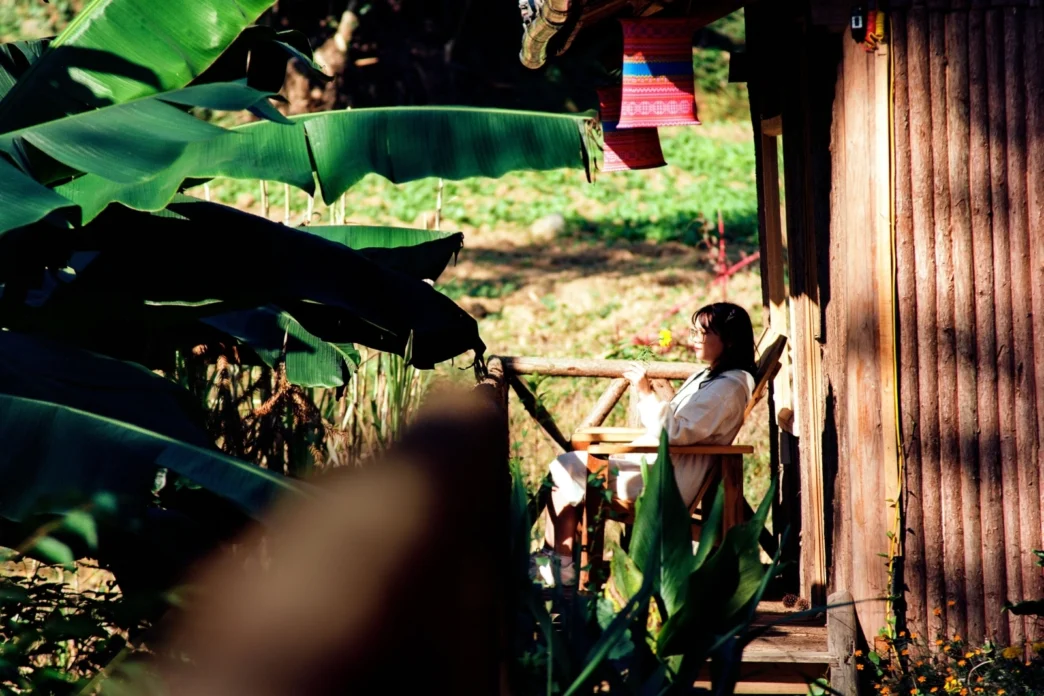
The phrase “digital detox retreat” covers more ground than it might suggest – from a fitness compound in the Santa Monica Mountains where phones are surrendered at check-in, to a limestone cave on a Thai beachfront used by Buddhist monks for centuries, to a Japanese-influenced spa in the Hamptons built on 5 acres with a hydrotherapy circuit designed to hold attention. What the category’s best versions share is a structural claim: that the absence of a screen is not incidental but the condition under which the rest of the program functions. A schedule dense enough to outcompete the device – four-hour morning hikes, clinical wellness appointments running back to back, a water circuit requiring full physical presence – proves to be the most reliable mechanism available.
The five properties here were selected because their device-free environment is designed into the program structure, not added as a marketing claim. They span four countries, five price tiers, and five distinct methods: physical exhaustion (The Ranch Malibu), ancient cultural context combined with clinical staffing (Kamalaya), Japanese aesthetic philosophy expressed through sensory precision (Shou Sugi Ban House), a structured daily schedule that outcompetes the digital pull (Cal-a-Vie), and a chef-developed nutritional program on a Costa Rican mountain ridge (The Retreat Costa Rica). The right choice depends less on geography than on which mechanism is most likely to actually work for a given person.
The shortlist: 
- Best for phone-surrender and daily physical intensity: The Ranch Malibu, California
- Best for clinical detox programs with Buddhist context: Kamalaya Koh Samui, Thailand
- Best for Japanese hydrotherapy and wabi-sabi design: Shou Sugi Ban House, New York
- Best for structured French spa programming in San Diego County: Cal-a-Vie, California
- Best for chef-led nutritional detox on a mountain ridge: The Retreat Costa Rica, Costa Rica
The Ranch Malibu, California
Guests at The Ranch Malibu hand over their phones at check-in. The policy is not a request and does not vary by room type: the program runs Sunday to Sunday, seven nights, with a morning hike of four to five hours through Santa Monica Mountains terrain as the structural anchor of each day. By the time the group reaches the ridge, the question of what to do with the hours ahead has already answered itself.
The property sits above Malibu, views toward the Pacific and inland to the chaparral-covered ridge. The program accommodates a maximum of 25 guests – a ceiling held for operational reasons, not atmosphere. After the morning hike, the schedule continues with afternoon fitness classes in TRX, yoga, and strength formats, daily massage, and three plant-based meals prepared on the property. Caffeine, alcohol, and meat are not served; the dietary commitment is part of the detox frame rather than an optional preference. Wi-Fi is available in private cottages, but the program’s design leaves few hours in which it could become habitual.
The Ranch identifies as a fitness property, not a spa – a distinction it holds clearly. The physical intensity is the primary mechanism, and the program does not shorten for guests who want a less demanding schedule. For those approaching the structured wellness category through a different lens, the Miraval model of habit-focused programming organizes similar goals around mindfulness and productive engagement rather than athletic exertion. Ultra-luxury all-inclusive weekly pricing; no abbreviated stays are offered.
Book at The Ranch MalibuKamalaya Koh Samui, Thailand
The cave at Kamalaya’s center is not decorative. For centuries before John and Karin Stewart developed the wellness resort on Koh Samui’s southern coast, Buddhist monks used this limestone formation as a site of sustained meditation. The Stewarts built the campus’s organizing logic around this feature rather than treat it as a curiosity – the cave remains accessible to guests as a meditation space. Its presence makes a specific argument about concentration without external input: not as a contemporary wellness concept but as a practice with centuries of operational history in this exact landscape.
Kamalaya’s device policy is stated on the official website without hedging: mobile phones, laptops, and tablets are not permitted in the property’s public areas of tranquillity. Each arriving guest receives a journal. The policy is reinforced by 19 structured wellness programs – among them Detox and Gut Renewal, and Stress and Burnout Recovery – staffed by a clinical team that includes a naturopath and traditional Chinese medicine practitioners. That clinical depth goes further than what most spa-led programs offer. Readers whose interest is specifically in meditation practice as the primary vehicle, rather than clinical detox, will find that dedicated meditation retreats serve a different purpose – less clinical structure, more practice-focused intensity.
The campus holds 76 rooms, suites, and villas across the hillside above 250 meters of private beach. Programs run from five nights and extend to longer formats. All-inclusive packages cover accommodation, meals from the property’s vegetarian and integrative kitchen, and the full wellness program. Mid-to-upper range pricing for Southeast Asia – the cost reflects the clinical staffing level rather than the country tier alone.
Book at KamalayaShou Sugi Ban House, New York
The property’s name carries the program’s premise. Shou sugi ban is a Japanese wood preservation technique: the surface is charred to harden it, producing a material that reads as austere and deliberate rather than decorated. The Water Mill property was built and named according to this principle – 5 acres, 12 rooms, and a design framework grounded in wabi-sabi, the aesthetic tradition organized around imperfection, incompleteness, and the quality of attention that reveals itself slowly rather than at a glance. The contrast with the visual accumulation of most luxury properties is functional, not incidental.
The daily offering centers on a hydrotherapy water circuit: a sequence moving through temperature variations and water-based therapies that requires the kind of sustained physical attention a screen interrupts. Alongside it, the program includes yoga, meditation, fitness sessions, and nutritional programming, with individual spa treatments available. The food program is organic and nutritionally composed. The 12-room scale keeps the guest-to-staff ratio high and the property genuinely quiet – not quiet in the performance sense, but as a physical condition of the building.
The property sits in Water Mill on Long Island’s East End, 90 miles from Manhattan. The distance is short enough that the journey requires no transatlantic commitment, long enough that the East End landscape registers as a genuine change in scale and pace. For guests in the US northeast corridor, this is the most geographically accessible property on the list. Ultra-luxury pricing; day programs and overnight stays available.
Book at Shou Sugi Ban HouseCal-a-Vie, California
Cal-a-Vie’s approach to the device question is environmental rather than enforced. The day begins at 6:30am with a morning hike and ends at 8pm with Observatory stargazing, with fitness classes in TRX, boxing, and aquatics formats, European French-inspired spa treatments, culinary demonstrations, and structured wellness programming filling the hours between. The phone does not disappear through rule but through the straightforward mechanism of a fully occupied day. By the second or third evening, its omission tends to become unremarkable.
The property occupies land in Vista, California, 7 miles inland from the Pacific in northern San Diego County, the terrain running toward chaparral and worked vineyards rather than beach. The campus holds 32 rooms – 25 spa villas and 7 suites. A working winery, Chateau Cal-a-Vie, operates on the estate with a Tempranillo vineyard; wine appears at dinner as part of the evening program, which addresses a common assumption about the category: that the absence of a device implies broader deprivation. The property earned the Condé Nast Traveler Readers’ Choice Award in 2025 and the Vogue Global Spa Award in 2026.
Programs run in three-, four-, and seven-night formats, all-inclusive, with the longer formats building a more individualized fitness and treatment schedule. For readers whose California wellness priority leans toward value over comprehensive programming, California’s accessible wellness retreats covers that end of the market separately. Premium all-inclusive pricing; the seven-night format delivers the fullest version of the Cal-a-Vie method.
Book at Cal-a-VieThe Retreat Costa Rica, Costa Rica
The Retreat Costa Rica was built on a mountain ridge outside San José by Diana Stobo – a chef, life coach, and author whose published work on nutritional detox predates the property. The ridge position produces a natural digital condition: the altitude creates limited cellular connectivity, and the structure of Stobo’s signature program fills the remaining hours with enough content that the absence of signal is rarely experienced as a gap.
The Naked Challenge, Stobo’s core program, includes 12 healing spa therapies, a holistic detox dietary protocol she developed, twice-daily yoga sessions, two wellness cooking classes taught by Stobo herself, and a copy of her guidebook. The cooking classes are a formal program element, not an optional add-on – a decision that reflects Stobo’s premise that the relationship to food is as central to a genuine detox as any environmental condition. Programs are confirmed active through December 2026.
The Costa Rican mountain context reinforces what the program requires: high-altitude light, distance from any urban center, and the particular quality of canopy that a ridge site in this region produces. The property sits at a more accessible price point relative to the US-based options on this list while offering comparable programming specificity. Mid-range pricing for the Central American market; a strong case for readers for whom the chef-led nutritional dimension is the most compelling point of entry.
Book at The Retreat Costa RicaCan I use my phone at a digital detox retreat?
The Ranch Malibu collects phones on arrival; guests do not hold them for the duration of the program. Kamalaya prohibits devices in all public tranquillity areas, though not in rooms. Shou Sugi Ban House and Cal-a-Vie use schedule density rather than formal confiscation – the day is full enough that the phone stops being reached for. The Retreat Costa Rica’s mountain ridge limits cellular signal as a natural condition. The most effective approach is the one matched to the individual: some people need the removal made external; others need only the absence of occasion.
How many nights does a digital detox retreat take to actually work?
Three nights is the practical floor for any perceptible shift – enough time to disrupt the sleep association with the device and establish a different morning rhythm. Seven nights allows the reset to consolidate: the first two days cover adjustment, the middle three the actual recalibration, the final two a settling into the new pattern. The Ranch Malibu’s mandatory seven-night minimum reflects this sequence. Three- to four-night formats at Cal-a-Vie and Shou Sugi Ban House work well as maintenance or as introduction to the category, less so as primary intervention for sustained digital fatigue.
Which country is best for a digital detox retreat?
Each destination in this list makes a different argument. Thailand combines clinical depth, environmental separation, and competitive pricing for the staffing level Kamalaya maintains – the on-site naturopath and traditional Chinese medicine practitioners go further than what the US properties on this list offer clinically. California’s programs add physical fitness as the primary mechanism, which suits some practitioners better than a clinic-led approach. Costa Rica provides comparable programming specificity at a lower overall cost. The Hamptons option is the right argument for those in the US northeast corridor for whom travel distance is the primary constraint.
What the Kamalaya journal records in its first pages – the one handed to each arriving guest in place of the phone – is rarely insight. It is logistics. The appointment time for the morning treatment. A note about what to bring for the beach walk. The absence of the device shows itself first in where information used to go: something that was once typed into a search field is now written out by hand on a blank page. The difference is small. It accumulates.


