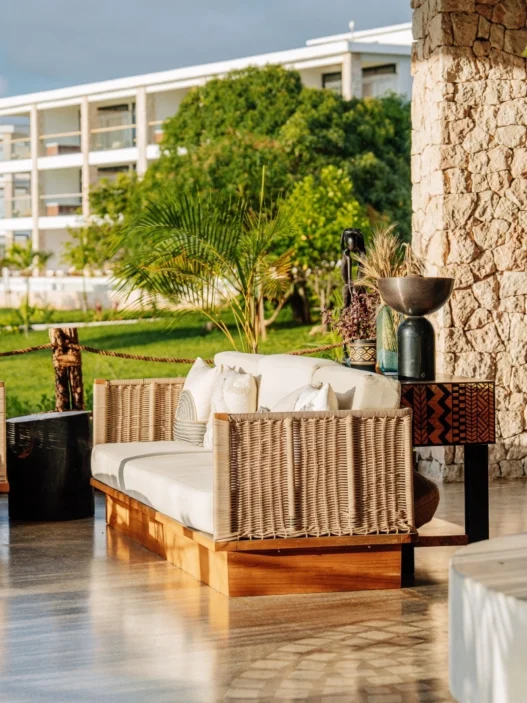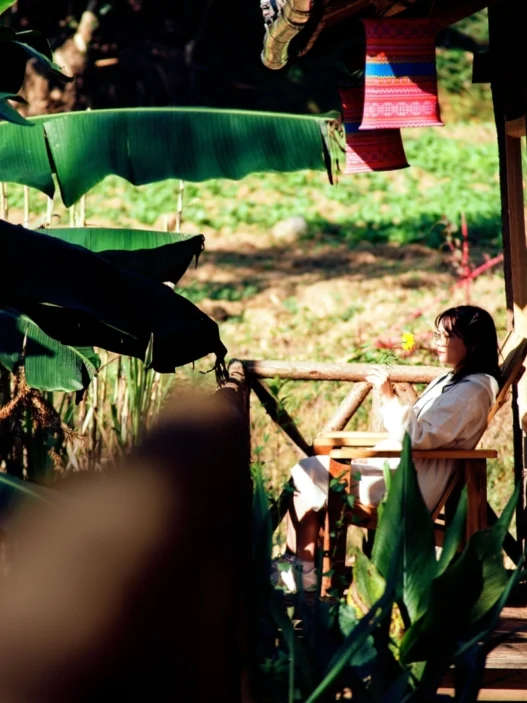

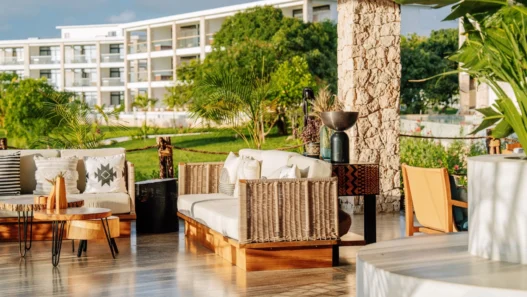

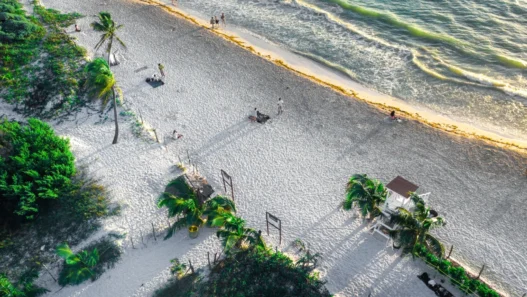

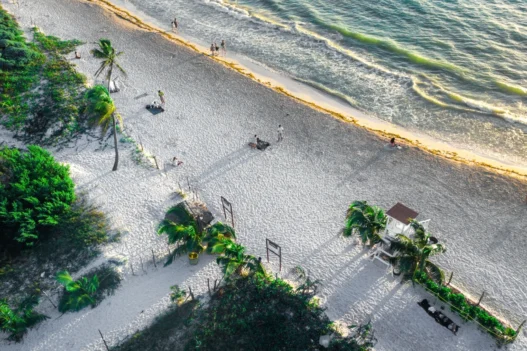
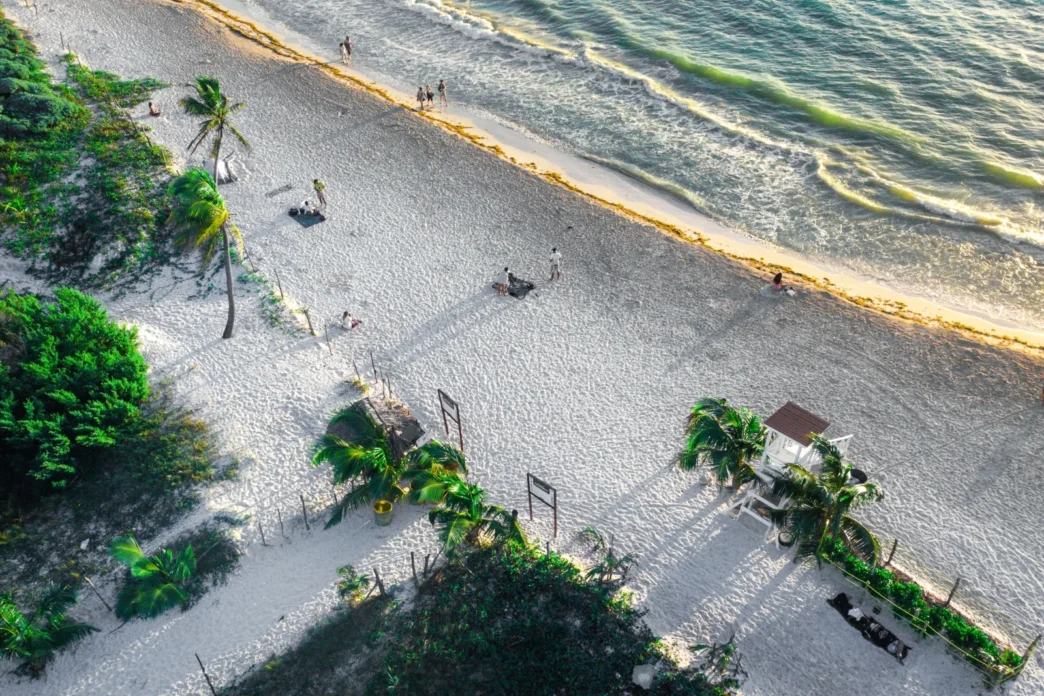
The yoga retreat scene in Tulum emerged from the same conditions that drew the original travelers: a stretch of Caribbean coast where lowland jungle meets the sea, Mayan ruins visible from the beach, and a climate that makes early-morning practice possible year-round. What started as palapa studios and beachside shacks has developed into a range of residential retreat centers with serious programs – cenote access, established teacher lineages, and daily schedules built around practice rather than around a hotel spa’s yoga class. A tulum yoga retreat worth the flight will be defined by the quality of the instruction and the program structure, not just the view from the shala.
The five properties below represent the range of what a yoga retreat in Tulum can mean in practice: a structured all-inclusive beach program, a boutique hotel hosting visiting teachers, a town-based studio with small-group instruction, a jungle wellness community with daily multi-style classes, and a beachfront property with ritual programming woven through the weekly schedule. Readers comparing the domestic counterpart will find a parallel shortlist in the guide to yoga retreats in Florida.
The shortlist: 
- Best for a structured all-inclusive week on Tulum beach: Amansala
- Best for a boutique beachfront with temazcal and cacao ceremony: Casa Violeta
- Best for combining yoga with cenote diving: Tribal Tulum
- Best for daily multi-style yoga in a jungle community: Holistika Tulum
- Best for sunrise yoga and ancestral ritual programming on the beach: Nômade Tulum
Amansala
The morning beach walk that opens each program day at Amansala – barefoot on the Caribbean tideline at km 7 of the Carretera Tulum-Boca Paila road – has been the starting point for guests since 2001, when founder Melissa Perlman built what became one of the most recognized yoga and fitness retreat centers in Mexico. The property’s wabi-sabi architecture, using organic materials throughout, predates the now-widespread Tulum design vocabulary by more than a decade. The stretch of beach here remains relatively uncommercial by Tulum standards.
Programming runs on two in-house formats: the Bikini Bootcamp, which layers daily yoga, pilates, HIIT, sculpt-and-tone, and boxing fitness onto the beach schedule, and the Restore and Renew program, which tilts toward slower practice, journaling, and meditation. Both run for six nights as fully all-inclusive programs – accommodation, three meals daily, all classes, two spa services, a Mayan clay ritual, and guided tours of local highlights. The kitchen philosophy, described as “from the earth to your plate,” is locally sourced and vegetarian-forward but not strict. Room options range from beachfront to garden, all with private bathrooms. One dinner per week is not included by design, giving guests space to experience Tulum’s restaurant scene independently.
Mid-range by Caribbean beachfront retreat standards. Forty-five minutes from Tulum International Airport; two hours from Cancun.
Casa Violeta
The Yoga Shala at Casa Violeta sits on what the property describes as an energetically significant position within the site – a dedicated practice space with views across the ocean and surrounding tree canopy, set apart from the sixteen individually designed cabanas along Tulum beach at km 8.270. Casa Violeta operates as a boutique hotel with a wellness program, hosting visiting retreat teachers throughout the year who bring their own students and build their programs around the property’s infrastructure: the shala, the spa facilities, and the beach itself.
The wellness offering integrates ceremony alongside the physical practice: temazcal (the Mesoamerican ceremonial sweat lodge), cacao ceremonies, and massage are offered alongside the yoga schedule. The restaurant, with a menu developed by Italian chef Alex Sala that draws on both Italian and Mexican traditions, operates beachfront with direct ocean views. This ceremony-layered structure suits teachers running immersion formats – a cacao ceremony before morning practice, temazcal as a weekly integration session – more than it suits guests arriving solo without a retreat context. Checking the property’s retreat calendar before booking is advisable, as hosted teacher programs vary by season.
Mid-range to premium, depending on cabana type and current retreat program. Accessible from Tulum town by bike or taxi along the beach road.
Tribal Tulum
Tribal Tulum occupies a different position in the Tulum retreat market: a dedicated yoga studio on Avenida Coba Sur in the town center, with loft-style apartment accommodations and a program built around small-group instruction rather than resort amenities. The six-night Personal Yoga Retreat structures the week around daily studio sessions, morning meditations, and meaningful teacher access (distinct from the formal sitting-only formats covered in the Transcendental Meditation retreat guide) – the kind of individualized feedback that disappears in large-group resort formats. A Mayan purification ceremony (temazcal) is included in the residential program, as is a bicycle for independent exploration of the town and beach corridor.
The Dive and Yoga program runs the same six nights and adds three days of cenote diving to the daily practice schedule – a combination specific to Tulum’s geological situation, where one of the world’s largest underground river systems surfaces in hundreds of freshwater cenotes within driving distance of the town. The program includes four pre-dive meditation sessions designed to develop breath control alongside the physical diving preparation. A 21-day residential option is also available for longer stays, structured around habit formation and consistent daily practice over a month. Accessible pricing relative to the beach-corridor properties; urban location means proximity to restaurants and transport without a beach-road premium.
Holistika Tulum
Holistika occupies a compound in the Tulum town zone – not on the beach road, but set in the jungle interior where the town’s residential grid gives way to the surrounding vegetation. The property was built around the premise that wellness infrastructure should be accessible without a beachfront premium, and the pricing reflects that: twenty-four rooms distributed across the site, centered on two pools and the community spaces where daily programming runs. The address – Avenida 10 Sur in the town center – puts cenotes, restaurants, and the beach road within easy reach by bicycle.
The yoga schedule covers the breadth of contemporary practice: Hatha, Vinyasa, Kundalini, and Acro yoga appear across the weekly timetable, with a dome space used for weekly sound healing, meditation, and cacao ceremonies. Visiting teachers run multi-day retreat programs throughout the year, bringing their own students and building formats around the studio infrastructure. The Tierra restaurant operates on a vegan and vegetarian menu with a focus on local sourcing – cruelty-free and stated so explicitly. Temazcal is available within the weekly activity calendar. The community center functions as a larger event venue for workshops and hosted programs. For women traveling in groups looking for a socially connected retreat format, the visiting teacher calendar at properties like Holistika and Casa Violeta offers a different dynamic than solo booking – a pattern examined further in the women’s yoga retreats guide on SanctumStay.
Accessible pricing relative to the beach-corridor properties. Approximately fifteen minutes from the beach hotels by bicycle or taxi.
Nômade Tulum
Nômade sits at kilometer 10.5 of the Carretera Tulum-Boca Paila road, between the Caribbean and a dense stretch of Mayan jungle. Ninety-eight accommodations are distributed across the property – canvas canopies, casitas, and rooms – maintaining the light architectural footprint the location requires. The beach here is quieter than the stretch closer to Tulum town, and the design prioritizes that condition. The surrounding vegetation has been kept largely intact, and the property reads more as a clearing in the jungle than as a resort imposed on it.
The daily wellness schedule runs from sunrise yoga and guided meditation through cacao ceremonies, sound healing, ancestral ritual programming, and full moon gatherings. The Yaan Spa operates a hydrotherapy circuit alongside a cedar sauna, eucalyptus steam room, and vitality pools – an unusually complete spa facility relative to the eco-retreat character of the surrounding architecture. The plant-based restaurant Macondo has developed a reputation that extends beyond the property. Programming at Nômade is less prescriptive than a formal retreat format: there is no mandatory schedule, and guests move through the offerings at their own pace. This suits practitioners looking for a wellness-oriented stay with ritual structure rather than a teacher-led immersion with fixed daily requirements. Premium pricing, consistent with the beachfront position and spa infrastructure.
How long should a yoga retreat in Tulum be?
Most structured residential programs at Tulum yoga retreats run five to seven nights – long enough to establish a daily rhythm and let the practice deepen past the first-day adjustment. The Amansala and Tribal Tulum programs both use six nights as their standard format. Shorter stays of three to four nights can work when individual classes or private sessions are added onto an independent room booking. If the goal is genuine immersion rather than a wellness hotel experience, five nights is the practical minimum.
Are Tulum yoga retreats suitable for beginners?
Several properties on this list work for beginners, but not all programs are designed for them. Amansala’s Bikini Bootcamp is fitness-forward, with daily HIIT and sculpt sessions layered on top of yoga, which suits active beginners but may be demanding for complete newcomers to both. The Tribal Tulum Personal Yoga Retreat, with its small-group format and daily teacher access, is the most structured option for developing foundational technique. Holistika’s daily multi-style timetable works for beginners because the range of formats means dropping into whichever class suits the current level. Visiting-teacher programs at Casa Violeta and Holistika vary by teacher – the style and stated level for each specific program should be checked before booking.
What is the best time of year for a yoga retreat in Tulum?
November through April is Tulum’s primary dry season and the most comfortable period for sustained practice. Humidity runs lower, rain is rare, and the Caribbean stays calm. The main retreat calendar at most Tulum properties concentrates in January and February, when visiting-teacher programs are most numerous. May through October is warmer and wetter, with the rainy season peaking June to October. Amansala and Holistika run programming through the full year; Nômade’s ritual calendar also continues through the wet season, with the jungle setting coming into its own when the vegetation is at its most dense.
The Tulum-Boca Paila road ends at the Sian Ka’an Biosphere Reserve, a boundary that has kept the southern stretch of beach outside the hotel development pressing in from the north. The properties that have lasted along this road – and in the town behind it – have done so because the programs are worth returning to: not only because the light on the Caribbean at sunrise is what it is, but because the instruction and the daily structure hold up on their own terms. That is the relevant test for a yoga retreat in Tulum: whether the practice itself justifies the flight.