


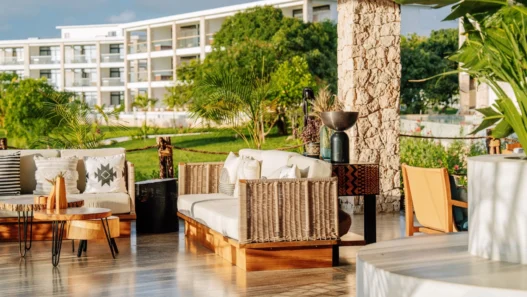








At Amangiri, nestled within Utah’s 600-million-year-old sandstone formations, the most expensive suites deliberately lack cell towers within a fifteen-mile radius. What began as a geographical constraint has evolved into the resort’s most coveted amenity. General Manager Sarah Chen reports that 89% of guests now specifically request signal-free accommodations, paying premiums of up to $3,000 per night for guaranteed digital silence.
This phenomenon reflects a broader transformation across America’s luxury wellness retreat landscape. Properties that once competed to offer the fastest WiFi now market their technological limitations as premium experiences. The shift represents more than hospitality trends—it signals a fundamental reconsideration of what constitutes luxury in an hyperconnected age.
The Neuroscience Behind Analog Luxury
Dr. Adam Gazzaley, neuroscientist at UC San Francisco and author of “The Distracted Mind,” has documented how constant connectivity creates measurable cognitive load. His research shows that even the presence of a silent phone reduces cognitive performance by 10%. “Our brains evolved for focused attention, not divided attention,” Gazzaley explains. “True cognitive recovery requires complete disconnection from digital stimuli.” 
This scientific foundation drives the programming at Miraval Arizona, where neurofeedback sessions help guests understand their baseline stress responses. The resort’s “Mindful Digital Integration” program, developed in partnership with Stanford’s d.school, teaches participants to recognize the physiological impact of notification anxiety—elevated cortisol, disrupted sleep cycles, shortened attention spans.
Indigenous Wisdom Meets Modern Wellness
Post Ranch Inn’s signal-free sanctuary draws from Esselen tribal practices of intentional solitude. The Esselen people, who inhabited Big Sur’s coastline for over 3,000 years, practiced “sacred waiting”—extended periods of silence to restore mental clarity before important decisions. Resort ethnobotanist Maria Santos, herself of Esselen descent, incorporates these traditional concepts into the property’s digital detox protocols.
“The Esselen understood that constant input prevents internal processing,” Santos explains. “Our ancestors would retreat to specific coastal caves for days, allowing thoughts to settle like sediment in still water.” The resort’s cliffside meditation pods are positioned at these same geological points, where natural acoustic properties create profound quiet even during Pacific storms.
This integration of indigenous wisdom with contemporary luxury wellness represents a sophisticated approach to cultural stewardship. Rather than appropriating surface elements, properties like Post Ranch Inn engage tribal consultants to ensure authentic, respectful programming.

The Economics of Enforced Disconnection
Signal-free luxury represents a $4.2 billion sector within the broader wellness tourism market, according to the Global Wellness Institute’s 2023 report. The average guest at these retreats spends 40% more per day compared to connected luxury properties, primarily on extended spa treatments, private sessions, and analog activities like horseback riding or guided stargazing.
Ranch at Rock Creek in Montana removed all cell infrastructure from guest areas in 2019. Managing Director Kate Morrison reports occupancy rates increased 23% within eighteen months. “Guests stay longer when they can’t work,” Morrison notes. “Three-day bookings became week-long stays because true decompression takes time.”
The economic model extends beyond accommodation premiums. These properties invest heavily in analog programming—master craftspeople teaching leather working, resident astronomers leading constellation workshops, foraging expeditions with mycologists. Activities that would seem quaint elsewhere become transformative when digital alternatives are removed.
Creating Intentional Friction
Blackberry Farm in Tennessee employs what hospitality designer John Pawson calls “intentional friction”—deliberate inconveniences that slow guests down. Phone charging stations exist only in the main lodge, requiring a fifteen-minute walk from guest cabins. The farm’s renowned cooking classes begin at dawn, when cellular towers experience maintenance blackouts.
“Luxury used to mean removing all obstacles,” explains Pawson, who has designed signal-free spaces for six major wellness retreats. “Now luxury means creating the right obstacles—ones that redirect attention inward rather than outward.”
The Physiology of Digital Silence
Dr. Michael Posner’s research at University of Oregon demonstrates that three days without digital input measurably improves executive attention networks. Brain scans show increased activity in the default mode network—neural circuits associated with creativity, self-reflection, and memory consolidation. “Digital silence isn’t passive,” Posner notes. “It’s neurologically active in ways we’re only beginning to understand.”
Cal-a-Vie Health Spa in California tracks these changes through biometric monitoring. Guests undergo cognitive testing upon arrival and departure, measuring reaction times, creative problem-solving, and emotional regulation. The results consistently show improvement after four days of complete disconnection, with benefits lasting up to six weeks post-retreat.
“We’re not selling the absence of technology. We’re selling the presence of unmediated experience.” — David Leavy, founder of luxury digital detox consultancy Analog Escapes
Beyond Individual Transformation
Signal-free luxury challenges fundamental assumptions about productivity and presence. At Brush Creek Ranch in Wyoming, corporate retreats now specifically request technology blackouts for executive teams. CEO Sarah Williams of biotechnology firm Genentech credits a five-day analog retreat with breakthrough strategic insights that led to a $180 million product pivot.
“When you can’t default to checking email during uncomfortable conversations, you’re forced into genuine dialogue,” Williams explains. “We solved problems that had stalled for months because we couldn’t escape into our phones.”
This represents a sophisticated understanding of luxury as enabling rather than indulging. Rather than providing every possible convenience, signal-free retreats create conditions for experiences impossible in connected environments—sustained eye contact, uninterrupted thought, the full sensory experience of place without digital mediation.
The luxury of disconnection ultimately offers something more valuable than amenities or services: the rare opportunity to exist fully in singular moments, without division or distraction. In an economy built on captured attention, true presence becomes the ultimate privilege—one that requires not just wealth, but the wisdom to occasionally surrender the tools that define contemporary life.
Continue the Journey: The new luxury: the rise of the nervous system reset retreat


