


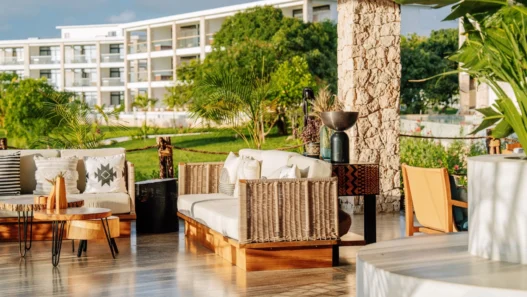








In a glass pavilion overlooking the Santa Monica Mountains, Dr. Sara Gottfried adjusts the dimmer to match circadian rhythms as fourteen executives settle into meditation cushions. It’s 6 AM at a private wellness retreat, and these women – CEOs, surgeons, federal judges – have traveled here not for relaxation, but for metabolic recalibration. What unfolds over the next five days represents a fundamental shift in how luxury wellness addresses the female body: not as a smaller version of male physiology, but as a complex hormonal ecosystem requiring entirely different protocols.
This scene reflects a broader transformation occurring across America’s most innovative wellness retreats. After decades of one-size-fits-all programming, luxury wellness properties are pioneering women-specific methodologies that address everything from cortisol dysregulation to perimenopausal insulin resistance. The result is a new category of retreat experience – one that treats hormonal optimization not as vanity, but as essential infrastructure for longevity.
The Science Behind Hormonal Syncing
The foundation of this movement lies in emerging research on infradian rhythms—the 28-day cycle that governs far more than reproduction. Alisa Vitti, founder of FLO Living and author of “In the Flow,” has documented how women’s energy, cognitive function, and metabolic needs fluctuate predictably throughout their menstrual cycle. During the follicular phase, estrogen’s rise supports high-intensity workouts and complex carbohydrates. The luteal phase, dominated by progesterone, calls for strength training and increased healthy fats. 
Canyon Ranch Woodside has become an early adopter of these principles, offering “Metabolic Flexibility” programs that teach women to eat and exercise according to their hormonal calendar. Nutritionist Dr. Ashley Turner, who consults for the retreat, explains that women who ignore these natural rhythms often experience what she terms “metabolic confusion”—weight gain, energy crashes, and mood instability that traditional wellness approaches fail to address.
Golden Door’s Pioneering Approach
At the Golden Door in Escondido, California, this science translates into highly personalized experiences. The retreat’s signature “Executive Restoration” program, launched in 2023, specifically addresses the unique stressors facing women in leadership. Unlike conventional stress management, the program targets the cascading effects of chronic cortisol on female reproductive hormones—a connection that CEO Kathy Van Ness discovered after her own burnout led to early menopause at 41.
The retreat’s approach centers on bio-individual nutrition, where registered dietitians like Maria Gonzalez create meal plans based on comprehensive hormone panels, genetic testing, and microbiome analysis. “A 45-year-old executive in perimenopause needs completely different macronutrient timing than a 35-year-old fertility patient,” Gonzalez explains, reviewing a guest’s customized protocol that includes adaptogens timed to cortisol peaks and magnesium supplementation calibrated to progesterone deficiency.
The Architecture of Women’s Wellness
The physical environments of these retreats reflect their deeper understanding of female physiology. Red Mountain Resort in Utah has redesigned its spa facilities based on research showing that women’s core body temperature fluctuates more dramatically than men’s throughout the month. Their new thermal suite includes graduated temperature zones, allowing guests to self-regulate based on where they are in their cycle.
This attention to detail extends to lighting protocols. Wellness consultant Mariana Figueiro, who directs the Lighting Research Center at Rensselaer Polytechnic Institute, has worked with several high-end retreats to install circadian lighting systems that support women’s more complex hormonal rhythms. At CIVANA Wellness Resort in Arizona, guests receive personalized light therapy recommendations based on their sleep patterns and cycle tracking data.
Beyond the Spa Menu
The most sophisticated women’s wellness retreats now incorporate what Dr. Aviva Romm, an integrative gynecologist and retreat consultant, calls “root cause medicine.” Rather than treating symptoms in isolation, these programs address the interconnected systems that govern women’s health: the gut-brain-hormone axis, mitochondrial function, and nervous system regulation.
At Miraval Austin, the “Hormonal Harmony” intensive includes sessions with functional medicine practitioners who examine everything from heavy metal exposure to ancestral trauma patterns stored in the nervous system. Guest testimonials consistently reference not just feeling better, but understanding their bodies in entirely new ways—knowledge that transforms how they approach nutrition, exercise, and stress management long after leaving the retreat.
The Economics of Female-Focused Wellness
This specialization reflects broader market dynamics. Women control 85% of household healthcare spending and increasingly seek experiences that address their specific physiological needs. The Global Wellness Institute reports that women’s wellness travel grew 53% between 2020 and 2024, significantly outpacing general wellness tourism.
Luxury retreat operators have responded by investing heavily in female-specific programming and practitioners. The Ranch at Live Oak Malibu recently hired Dr. Jolene Brighten, author of “Beyond the Pill,” as their women’s hormone consultant, while COMO Shambhala has developed partnerships with reproductive endocrinologists to offer on-site hormone optimization protocols.
These investments carry premium price points—women’s wellness retreat packages often cost 30-40% more than general programming—but occupancy rates remain consistently high. Industry analyst Sarah Johnson notes that repeat booking rates for women’s specialty programs exceed 70%, compared to 45% for traditional spa retreats.
The Future of Hormonal Optimization
As this movement matures, retreat offerings continue to evolve. The newest frontier involves precision medicine approaches that combine genetic testing, continuous glucose monitoring, and hormone tracking to create highly individualized protocols. At the Four Seasons Resort Rancho Encantado, guests can now receive comprehensive “biological age” assessments that measure everything from telomere length to inflammatory markers.
This data-driven approach represents a significant departure from traditional wellness retreats focused primarily on relaxation and general fitness. Instead, these programs position themselves as intensive medical experiences that happen to occur in luxurious settings—a hybrid model that appeals to accomplished women seeking measurable results rather than simply peaceful interludes.
The implications extend beyond individual health outcomes. As more women in positions of influence experience the benefits of hormonally-informed wellness practices, these approaches are beginning to influence corporate wellness programs, healthcare protocols, and even urban planning initiatives focused on supporting women’s health across their lifespans.
In this quiet revolution, the female body is finally being understood not as a medical mystery requiring management, but as a sophisticated system whose natural rhythms, when properly supported, become a source of sustained vitality and clear thinking. The luxury wellness industry, long focused on temporary escapes, has discovered something more valuable: the architecture for lifelong well-being, built on the foundation of women’s actual biology.
Continue the Journey: Shinrin-yoku: the science of Japan’s forest bathing


