




At 5:30 AM, the mist clings to Huayna Picchu like ancestral breath, and the first light reveals what the Quechua people have always known: the mountains are alive. Dr. Catherine Tucker, an ethnobotanist who has studied Andean communities for two decades, describes this moment as “stepping into a cosmology where stones pulse with energy and peaks hold the memory of civilizations.” This is where the modern Machu Picchu spiritual journey intersects with something far older – the unbroken thread of Pachamama reverence that predates the Inca by millennia.
The citadel itself sits at the precise confluence of sacred geography: Huayna Picchu to the north represents the masculine principle, while the gentler slopes southward embody feminine energy. This deliberate positioning reflects the Andean concept of ayni – reciprocal balance – that governs not just architecture but the relationship between humans and the living earth they call Pachamama, literally “World Mother.”
The Despacho Ritual: Offering to the Living Earth
Anthropologist Silvia Rivera Cusicanqui has documented how contemporary Pachamama ceremony Peru practices remain virtually unchanged from pre-Columbian traditions. The despacho ritual, performed by local spiritual guides called altomisayoqs, begins before dawn with the careful arrangement of offerings: coca leaves selected for their perfect symmetry, white wine as libation, and llama fat as the most precious gift. Each element carries specific meaning – coca for communication with the apus (mountain spirits), wine for joy, fat for abundance. 
Miguel Tantalean, master shaman from the nearby village of Ollantaytambo, explains the ceremony’s precision: “We don’t simply make offerings. We engage in conversation. Pachamama speaks through the coca leaves’ patterns, through the wind’s direction, through the condor’s flight path.” This dialogue forms the foundation of Andean spiritual rituals that treat the landscape not as backdrop but as active participant.
Sacred Sites and the Inca Trail of Consciousness
The 26-mile Inca Trail functions as more than pilgrimage route – it serves as initiation sequence through increasingly refined sacred sites Peru geography. Runkurakay’s circular temple marks the first level of spiritual preparation, while Sayacmarca’s “Inaccessible Town” represents the shedding of ordinary consciousness. The trail’s final approach to Intipunku, the Sun Gate, was designed to produce what archaeologist Brian Bauer calls “manufactured awe” – a psychological state that prepared pilgrims for encounter with the divine.
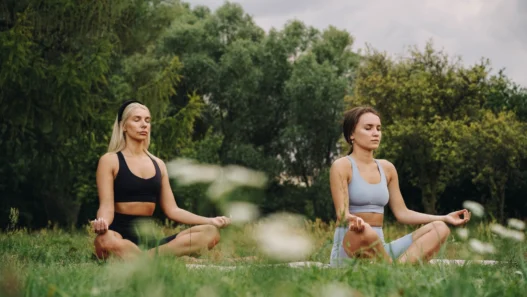
Modern practitioners of yoga within this Inca sacred landscape report experiences that transcend typical asana practice. Sarah Lipton, a certified teacher who leads retreats here, describes sessions at the Temple of the Moon: “The magnetic field is measurably different. Participants naturally hold poses longer, breathe deeper. It’s as if the stones themselves guide the practice toward greater stillness.”
The Astronomical Alignment of Ritual
Recent archaeoastronomical research by Dr. Giulio Magli reveals that Machu Picchu’s primary temples align with specific stellar events crucial to Andean cosmology. The Intihuatana stone – literally “hitching post of the sun” – marks not just solstices but the rising of the Pleiades, which signals planting season. This integration of celestial cycles into daily ritual reflects what indigenous teacher Amaru Machacuay calls “living astronomy,” where human ceremony mirrors cosmic rhythms.
Contemporary Shamanic Practice in Ancient Spaces
The resurgence of traditional Andean spirituality has attracted both serious practitioners and casual seekers to this transformative travel South America destination. However, authentic ceremony requires understanding the complex relationship between place, practitioner, and purpose. Don Carlos Nagual, hereditary keeper of Inca wisdom traditions, emphasizes that “Pachamama ceremonies aren’t performances for tourists – they’re conversations with living energy that demands respect, preparation, and genuine intention.”
The most profound ceremonies occur at specific power spots throughout the citadel: the Sacred Plaza where energy concentrates before dawn, the Temple of the Condor where participants report vivid dreams for weeks afterward, and the agricultural terraces where the earth’s fertility becomes palpable. Each location offers distinct qualities – some for releasing old patterns, others for receiving guidance, still others for integrating wisdom gained.
“In these moments of ceremony, the boundary between ancient and modern dissolves. You realize that consciousness itself is the true inheritance of this place.”
As the afternoon light angles across the citadel’s precisely cut stones, illuminating chambers where ceremony has continued unbroken for centuries, the deeper purpose of Machu Picchu emerges. This was never merely a royal estate or military outpost – it was a laboratory for consciousness, a place where human awareness could expand to encompass the vast intelligence of the natural world. In returning to these practices today, we don’t engage in recreation but in remembering: reconnecting with ways of knowing that honor both the wisdom of ancient civilization and the eternal presence of Pachamama herself.
Continue the Journey: Sedona energy healing: A dialogue with the red earth