





New England draws practitioners to it the way mountains draw weather. The tradition of solitude in the region predates modern wellness culture by centuries, but it took the 1970s for its contemplative infrastructure to coalesce into a recognizable map. The spiritual retreats in New England now include one of the world’s most respected vipassanā centers, a Tibetan Buddhist sanctuary founded in exile on over 700 Vermont acres, an Ayurvedic retreat in the southern Vermont foothills, and the largest yoga center in North America, all within a few hours of each other. What follows is not an exhaustive register but five centers that have built enough around depth of practice to be worth the travel.
They differ in tradition, scale, and price. Two are Buddhist in orientation, rooted in distinct lineages. One draws from the Indian āyurveda tradition. One is built around an independent teacher’s thirty-seven years of direct inquiry. And one functions as the region’s broadest entry point for yoga and mindfulness programs, drawing faculty from across the North American contemplative world. All five are retreat centers in the strict sense: places where the structure of the day exists to serve the practice.
The shortlist: 
- Best for silent small-group immersions: Rolling Meadows Retreat
- Best for Tibetan Buddhist lineage: Karmê Chöling
- Best for Ayurvedic immersion in Vermont: Sētu Vermont
- Best for vipassana with serious teachers: Insight Meditation Society
- Best for yoga programs across levels: Kripalu Center for Yoga & Health
Rolling Meadows Retreat
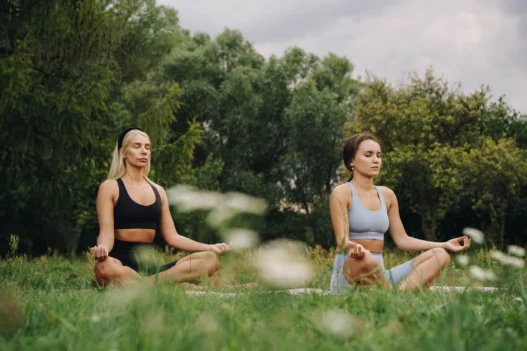
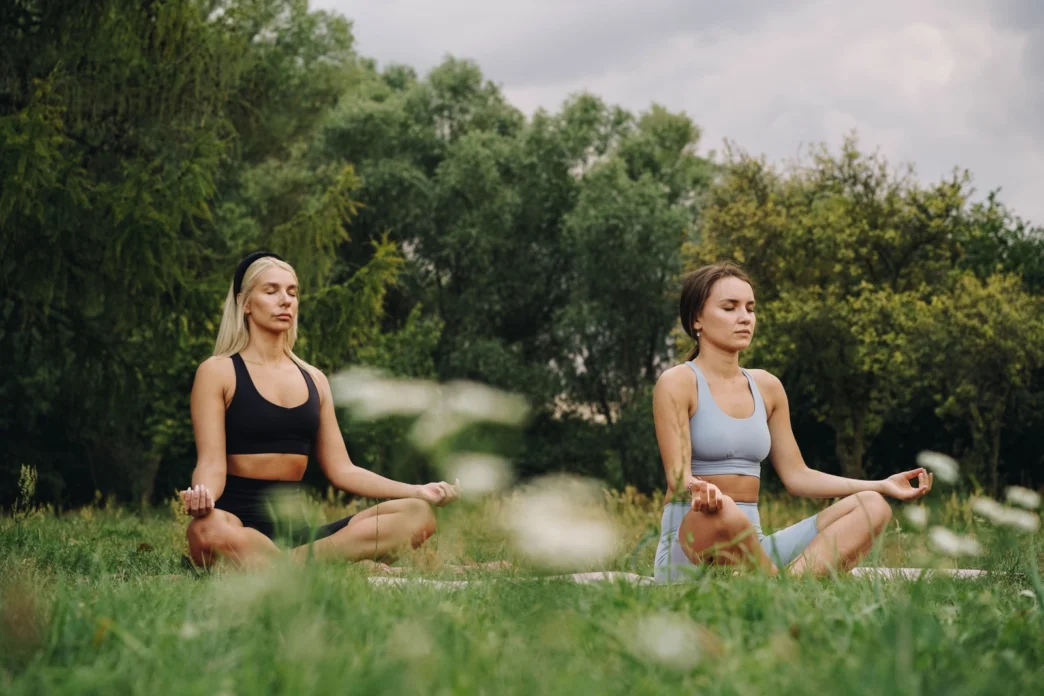
The house rule at Rolling Meadows states that silence is observed not only during formal meditation but during meals and the intervals between sessions – a requirement that changes the texture of the entire day, not just the scheduled sitting. Surya-Chandra Das has led these immersions since 2001, drawing on thirty-seven years of practice and study with teachers in India. What he offers, in his own framing, is not technique but a lived understanding of what it means to return to stillness.
Rolling Meadows does not maintain a fixed campus. Retreats run at rented properties in mid-coast Maine and occasionally Vermont – intimate houses on land chosen for their conditions: distance from ordinary interruption, proximity to fields and water. Groups rarely exceed eleven participants. The format is a five-day silent immersion of yoga, meditation, and prānāyāma (breathwork), with all meals included and vegetarian throughout. The venue rotates between properties like Casa Portal in Jackson, Maine and a farmhouse near Cushing, but the structure of the week stays consistent.
The practice is framed as direct inquiry into the nature of awareness – what persists when habitual thought is not being generated. This is not the standard yoga retreat framework; it is closer to the non-dual inquiry lineages of certain Indian teachers, applied within a format that enforces silence rigorously. Dates sell out quickly and often close without public announcement. The program does not grow to accommodate demand.
Programs run as five-day all-inclusive immersions, strictly vegetarian. Accessible boutique pricing for the depth and duration offered.
Karmê Chöling
The main shrine room at Karmê Chöling is a formal Tibetan space: thankka paintings, offering objects arranged on a shrine table, cushions in rows facing a central altar. It is not decorative. The center was founded in 1970 by Chögyam Trungpa Rinpoche, a Tibetan meditation master who fled Chinese occupation in 1959, later studied at Oxford, and became one of the foremost translators of Tibetan buddhadharma for Western students. The teachings at Karmê Chöling descend from him in a direct lineage.
<p.The campus occupies over 700 acres in the Green Mountains outside Barnet, Vermont – forests, streams, fields, and a year-round residential community whose members work and practice alongside visiting retreatants. Physical structures include the main house, the Purkhang (a Tibetan-style shrine building), an organic garden tended by residents, and seven solitary retreat cabins dispersed across the property for practitioners doing extended personal practice. Kyudo, the Japanese contemplative archery discipline, is taught on the grounds as one of several embodied practices offered alongside formal meditation instruction.meditation instruction.
Programs range from introductory Shambhala training weekends to five-, seven-, and ten-day deep meditation retreats, to the sequential Shambhala Training curriculum for those pursuing the path formally. Solitary cabin retreats are available by application. Meals are included in all residential programs. Financial aid is actively administered; residency with telecommuting is available for those who want a longer stay.
Mid-range pricing for most programs; financial assistance available.
Sētu Vermont
The wellness center at Sētu was designed to resemble a south Indian temple – specific archways, materials chosen for the effect, an architectural intention that continues into the yoga śāla housing an altar to Lord Ganesha. This is not a general wellness center that borrowed from Indian tradition as a branding decision; the property was built around Indian practice from the ground up, and it shows in the coherence of the detail.
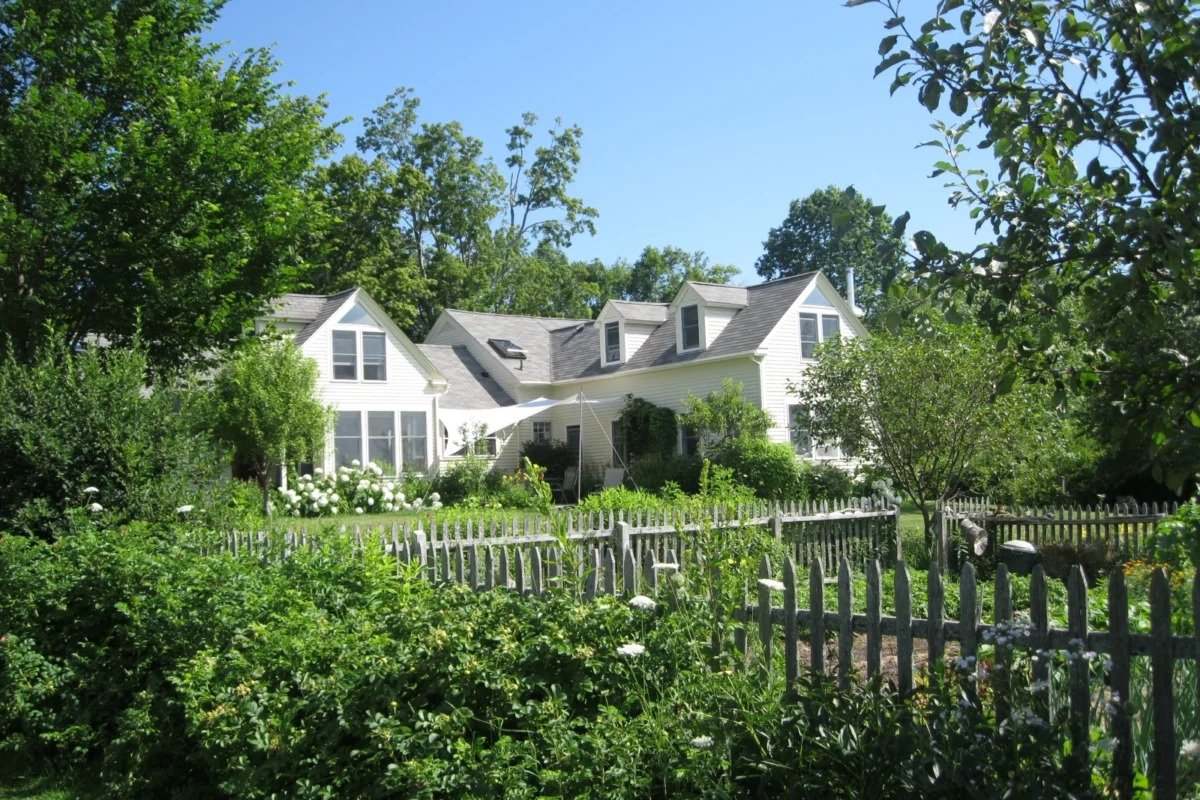
Sētu sits on thirteen acres of forested land at 241 Quails Hill Road in Brattleboro, in southern Vermont’s foothills, with views of Round Mountain and a spring-fed pond on the grounds. Guest rooms draw from different South Asian and North African textile traditions: Rajasthani kantha quilts and indigo-printed cottons in some, Moroccan-patterned linens and metalwork in others. Outdoor amenities include a pool, an infrared sauna, and a hot tub. Hearthside dining and a glass sunroom allow guests to remain in the landscape without leaving the building.
Treatment offerings include traditional abhyanga (Ayurvedic oil massage applied in a rhythmic bilateral sequence) and private sound healing sessions. Retreats run as three-day programs across several formats: Ayurveda, meditation, stress reset, couples, and seasonal wellness. A 220-hour Ayurveda training runs in a semester format for those pursuing formal study. On-site enrollment for training programs is capped at twenty-three, and retreats run with comparably small groups.
Mid-range pricing; programs are all-inclusive with vegetarian meals.
Insight Meditation Society
The Insight Meditation Society was founded in 1975 on a premise that still organizes everything about the place: that the vipassanā tradition of Theravada Buddhism, practiced in depth, is available to anyone who shows up and sits. Sharon Salzberg, Jack Kornfield, and Joseph Goldstein co-founded IMS after studying under Burmese and Thai masters; they built a center that treats the teaching relationship with the same gravity their own teachers brought to it. Course teachers at IMS receive no salary from program fees – they rely on dāna (generosity contributions) from participants, a continuation of the tradition in which they trained.
IMS operates two facilities on its rural Massachusetts property outside Barre. The Retreat Center has offered structured meditation courses since 1976, with programs ranging from a weekend to three months; all are built around vipassanā and mettā (lovingkindness) practice and include extended periods of noble silence. The Forest Refuge, a separate building on the same grounds, is designed specifically for practitioners pursuing longer, more sustained personal retreats under teacher guidance – it accepts participants by application and is intended for those with an established practice.
Fees operate on a sliding scale calibrated to individual means. Vegetarian meals are included. Financial assistance is available. The combination of rigorous lineage, accessible pricing, and a fifty-year institutional record gives IMS a standing in the North American contemplative world that few centers in any region can match.
Most accessible price tier on this list, sliding-scale basis; teacher dāna is a separate and voluntary contribution.
Kripalu Center for Yoga & Health
On the western edge of Massachusetts, where the southern Berkshire Hills level out toward the state line, Kripalu has operated as a residential yoga center for more than fifty years. By scale, it is the largest yoga retreat center in North America: more than eight hundred programs annually, four active Schools on campus (Yoga, Ayurveda, Mindful Outdoor Leadership, and Integrative Yoga Therapy), and a visiting faculty roster that includes many of the significant teachers in contemporary yoga and mindfulness education.
The campus at 57 Interlaken Road in Stockbridge sits above Lake Mahkeenac – a Berkshire lake visible from the upper floors and common areas of the building – with the hills running west toward the New York state line. Kripalu is a nonprofit organization, and its educational mission shapes the programming mix: unstructured R&R stays (daily yoga classes, meals, and the grounds, with no scheduled obligations) sit alongside residential teacher trainings that span several weeks. The Healing Arts department offers bodywork including abhyanga and other Ayurvedic treatments as add-ons to any stay.
What the scale enables is something smaller centers cannot offer: the ability to hold all levels simultaneously. A first-visit participant and a teacher completing an advanced certification may share the same morning class options, the same dining hall, the same grounds. For practitioners weighing whether a contemplative retreat is worth pursuing further, Kripalu is a low-commitment entry point with enough depth to make the question answerable.
Accessible to mid-range pricing depending on program and accommodation; R&R stays offer the most flexible entry point.
Do I need prior meditation experience for a spiritual retreat in New England?
No prior experience is required at most of these centers. IMS and Karmê Chöling both offer introductory programs designed specifically for beginning meditators. Kripalu and Sētu Vermont accept newcomers across all formats. Rolling Meadows works with participants regardless of sitting background, though comfort with extended silence over five consecutive days is worth assessing honestly before committing to that format. For a first retreat, Kripalu or Sētu Vermont offer more structured support; for rigorous formal instruction, IMS introductory programs are designed for exactly that purpose.
What is the best time of year for spiritual retreats in New England?
Spring and fall – May through June, September through October – are the most reliably comfortable seasons, with moderate temperatures, full program calendars, and autumn foliage drawing larger numbers to Vermont and Massachusetts centers from late September. Summer is peak season at Kripalu. IMS and Karmê Chöling run year-round. Winter retreats draw fewer participants across the board; the Green Mountains setting at Karmê Chöling changes considerably under snow, and some practitioners find the season itself a useful condition for practice.
How much do spiritual retreats in New England cost?
Fees vary by center and program length. IMS is the most financially accessible option here, with a sliding scale calibrated to individual means and financial assistance actively available. Rolling Meadows five-day immersions fall at the accessible end of the market for that depth of program. Karmê Chöling offers substantial financial aid. Sētu Vermont and Kripalu sit in the mid-range, with Kripalu’s R&R format among the more flexible entry points. No center on this list requires a luxury travel budget; most programs include accommodation and meals in a single fee. Current rates are listed on each booking page.
New England’s contemplative centers were not built in the same decade or for the same reasons – some grew from a teacher who arrived with a specific lineage and needed somewhere to put it, others from institutional vision that outlasted its founders. The geography gathered them within reach of each other, which is its own kind of resource. A week at Karmê Chöling in the Green Mountains and a week at IMS in the central Massachusetts uplands are entirely different experiences. The region holds the range.
For readers who want the New England landscape without the retreat schedule, our guide to New England’s spa hotels covers mountain resorts, village inns, and coast properties across the region.


