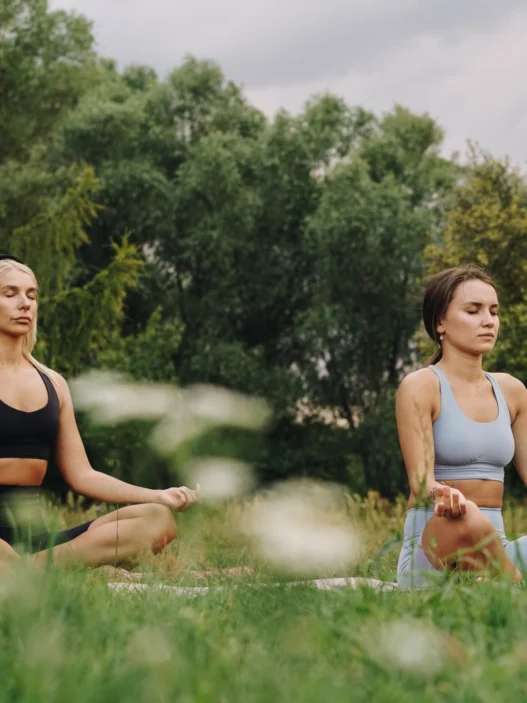



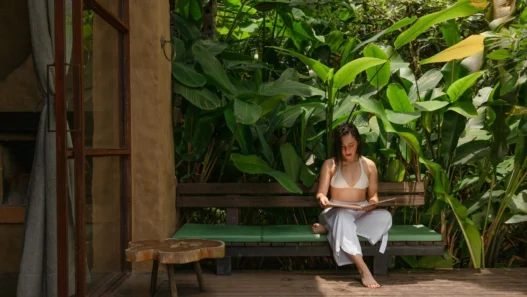
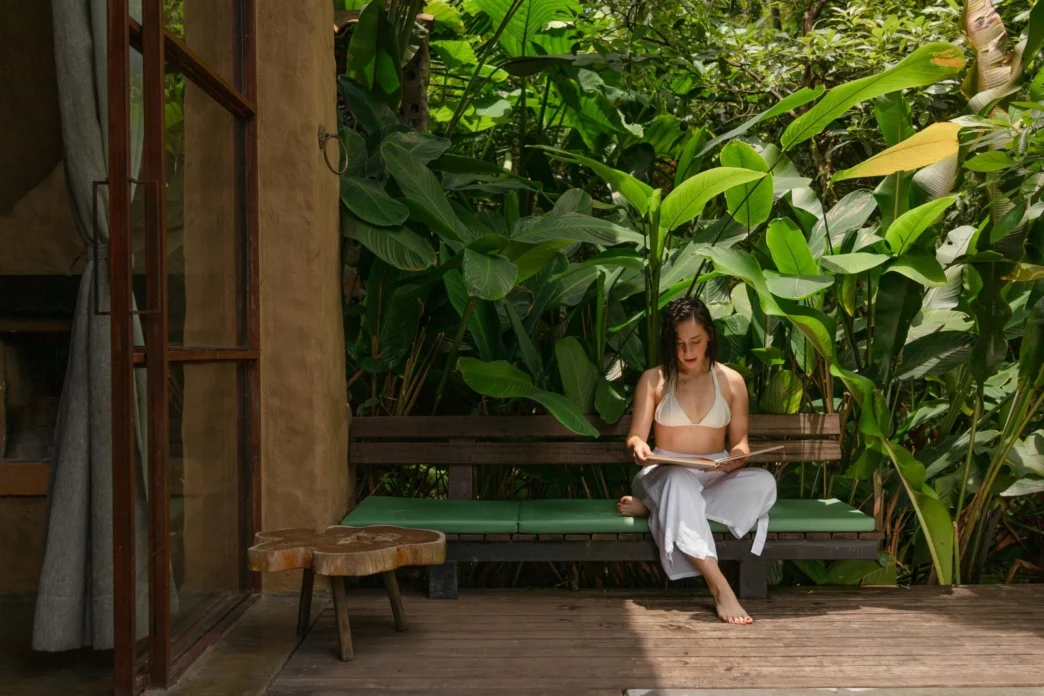
A women’s yoga retreat means something different depending on who is running it: thirty acres of pine forest in East Texas, a beachfront eco-resort on Costa Rica’s Osa Peninsula, a garden estate in Peru’s Sacred Valley between Cusco and Machu Picchu. What they share is a deliberate absence of men from the guest list and a program built around daily practice rather than sightseeing. The format has grown into its own category over the past two decades, with dedicated centers now operating on at least three continents and waitlists common at the strongest of them. Some are single-property retreat centers open only to women; others are women-only sessions hosted periodically inside larger, mixed-gender resorts. The appeal, for most guests, has less to do with excluding men than with a specific kind of ease: no negotiating who leads the group conversation, no calibrating a workout or a wardrobe choice against anyone else’s expectations. That ease shows up differently at each property on this list, whether it’s a shared cabin room in the pines or a private villa with its own dedicated hostess, but the underlying premise stays consistent across all five: fewer social variables to manage, more attention left over for the practice itself.
The five below were chosen for verified current operation, distinct settings, and a spread of price points, from an accessible all-inclusive weekend to a fully staffed private villa. Retreat in the Pines anchors the accessible end from inside a Texas pine forest. Blue Osa and Bodhi Tree Yoga Resort, both on Costa Rica’s Pacific coast, split the middle ground between beach-focused wellness and yoga paired with surfing. Willka T’ika sits in Peru’s Sacred Valley. Bliss Sanctuary for Women, with three locations across Bali, closes the list at the private-villa end of the market. Each entry below was checked directly against the property’s own current booking pages rather than aggregator listings, since retreat calendars, room configurations, and program names change often enough that older write-ups elsewhere online can no longer be trusted at face value.
The shortlist: 
- Best for an affordable first retreat: Retreat in the Pines
- Best for beginners who want beach and yoga in equal measure: Blue Osa
- Best for combining yoga with surf instruction: Bodhi Tree Yoga Resort
- Best for a garden retreat built around Andean ceremony: Willka T’ika
- Best for solo travelers who want total privacy: Bliss Sanctuary for Women
Retreat in the Pines, Texas
Retreat in the Pines sits on thirty acres of pine forest in Mineola, Texas, about two hours from Dallas-Fort Worth. Founded in 2004, it describes itself as the first and only women-only retreat center in the state, and two decades of returning guests back up the claim; reviewers write about coming back for a birthday weekend, then again the following year with a different group of friends. The center runs Friday-to-Sunday sessions built around rotating guest leaders, with 2026 dates including Restore & Renew, Journey Within, and Grounding & Growth. Yoga instruction, led by teachers with at least five years of experience, is paired with guided meditation, journaling, and a chef-prepared menu covering three days of meals. Instruction stays at an all-levels pace rather than tied to a single lineage or tradition. Rooms are shared rather than private, in keeping with the retreat’s stated focus on community over solitude, and a Retreat Assistance Program subsidizes spots for guests who could not otherwise attend. Coverage from SELF, Yoga Journal, Texas Monthly, and Travel + Leisure has followed the center’s two decades of operation, and it was named a top yoga retreat center by USA Today’s 10Best in 2023. This is the accessible end of the category: an all-inclusive weekend priced well below the week-long retreats elsewhere on this list, with no single-supplement complexity to navigate. It sits alongside a wider field of wellness retreats across the US that, unlike this one, aren’t built specifically around a single weekend or a women-only guest list.
Blue Osa, Costa Rica
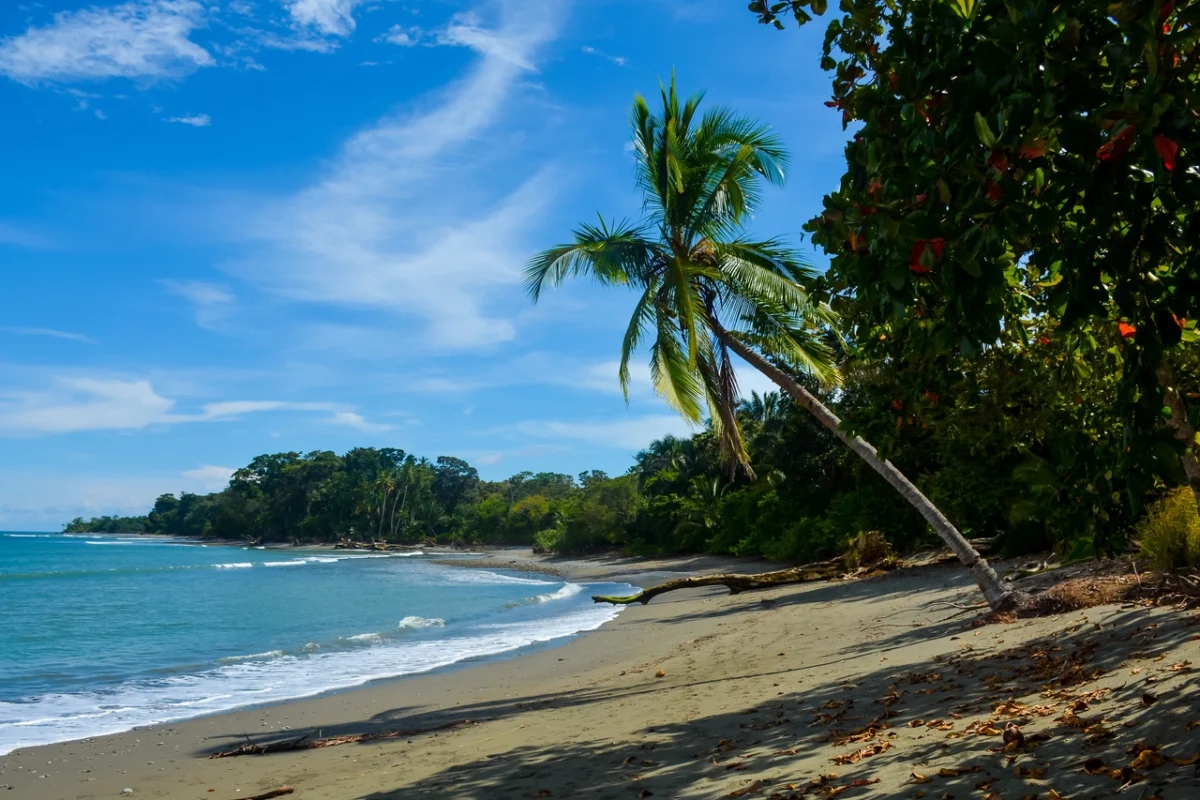
Blue Osa occupies a stretch of beach on the Osa Peninsula, a region National Geographic once called the most biologically intense place on Earth, fifty meters from its own open-air, second-floor yoga studio. The thirteen-room eco-resort runs on a solar micro-grid and draws its meals from an organic farm-to-table kitchen, with breakfast built around fruit and superfoods grown on site. Founder Yogi Aaron, teaching for more than three decades, developed the property’s AYAMA methodology, a system combining applied yoga anatomy with muscle activation aimed at pain-free movement rather than tied to a specific spiritual tradition. Classes draw on multiple established styles, including Hatha, Vinyasa, Iyengar, Ashtanga, Anusara, and Kundalini, with instructors selecting a style to suit the day’s group rather than committing the whole week to one method. Roughly sixty to seventy percent of guests arrive solo, many of them women drawn by the property’s reputation for a secure, closely staffed environment with overnight on-site security and no public access to the grounds. The resort also markets itself to guests who want a genuine break from email and phone signal, a pitch it makes explicitly to professionals booking a retreat as a full digital detox rather than a working vacation. Weekend and week-long packages both include daily yoga across styles from Hatha to Kundalini, spa treatments using locally sourced ingredients, and farm-to-table meals with dietary accommodations available on request. Blue Osa sits at the middle of this list’s price range: not the least expensive option, but priced below the private-villa properties, with packages scaled by length of stay and room occupancy.
Bodhi Tree Yoga Resort, Costa Rica
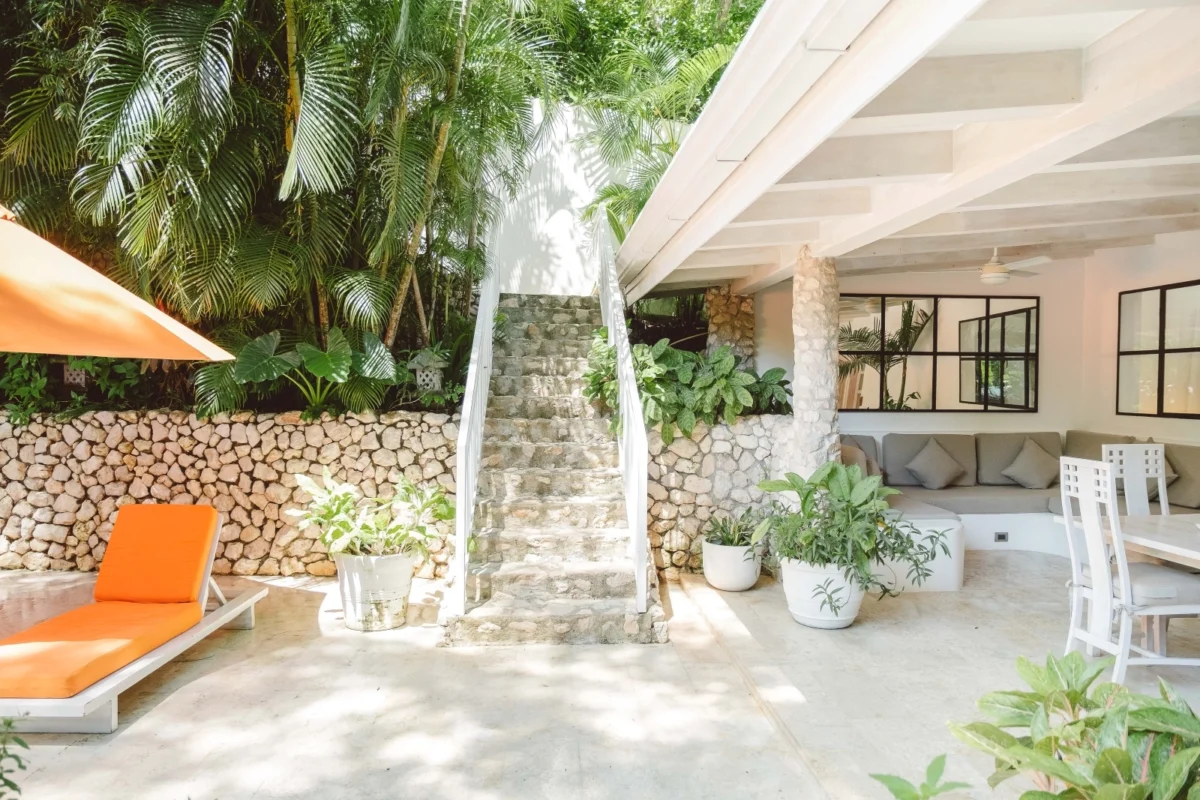
Bodhi Tree Yoga Resort sits a five-minute walk through jungle from Playa Guiones, one of Nosara’s best-known surf beaches on Costa Rica’s Nicoya Peninsula. The resort hosts a long-running women’s retreat built around the pairing of yoga and surf instruction, now in its third decade of annual editions under the same lead instructor, alongside other women-specific sessions such as a self-discovery week built on daily yoga and group reflection. Two saltwater pools, modern Balinese-influenced rooms, and an on-site spa round out the property beyond its open-air yoga shalas. Retreat weeks typically run seven nights, combining two yoga sessions a day with surf lessons scaled to any experience level, from first-timers to guests refining a pop-up. Meals are served on site through the resort’s own dining program, with vegetarian and other dietary needs accommodated on request, and the property’s juice bar and spa operate independent of any specific retreat. Bodhi Tree also runs its own 200-hour yoga teacher training in partnership with iLa Yoga, held separately from the retreat calendar for guests who want to extend a stay into certification. Bodhi Tree sits at a premium tier within this list, priced for a full week rather than a weekend, and positioned toward travelers who want the ocean itself to be part of the practice, not just the backdrop to it.
Book at Bodhi Tree Yoga Resort
Willka T’ika, Peru
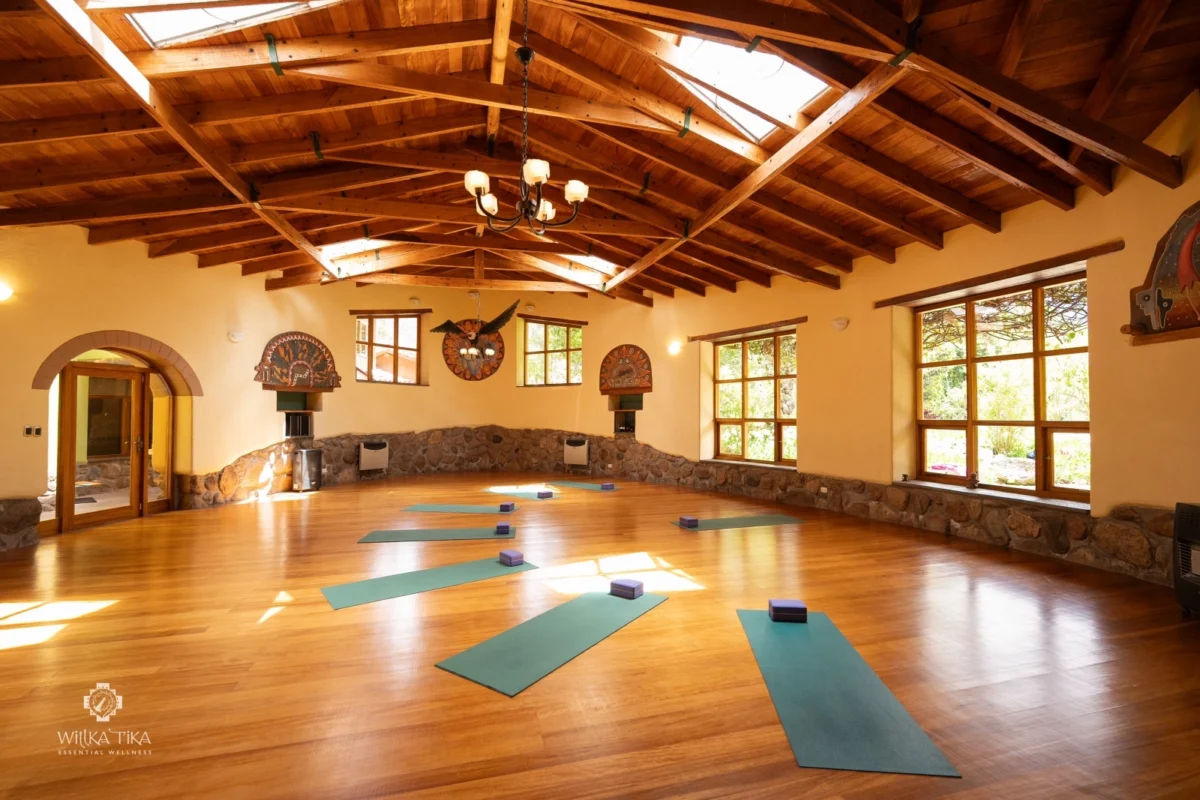
Willka T’ika sits in Peru’s Sacred Valley, between the Inca citadel of Machu Picchu and the city of Cusco, its name Quechua for sacred flower. Founder Carol Cumes opened the property in 1994 around a series of gardens laid out to correspond with the seven chakras, still the estate’s defining feature and the setting for much of its outdoor yoga practice. Rooms span three tiers, ten garden rooms up to twelve luxury garden rooms and four deluxe suites with king beds, and the kitchen serves vegetarian, farm-to-table meals drawing on produce grown in the estate’s own gardens. Programming blends yoga with Andean ceremony and guided excursions into the valley, including access to Machu Picchu itself, framed through Quechua cosmology rather than generic wellness language. The property has been covered by Travel + Leisure, Vogue, CNN Travel, and Yoga Journal, among others, over its three decades of operation, and continues to be run with Cumes’ original emphasis on Andean cosmology rather than a generalized version of South American spirituality. Willka T’ika sits at the luxury tier of this list, with seven-night programs the standard format and pricing that reflects the private guiding, ceremony, and excursion time built into every stay, distinct from the more self-directed schedule at the other properties here.
Bliss Sanctuary for Women, Bali
Bliss Sanctuary for Women operates three women-only properties across Bali: the original Canggu Sanctuary five minutes from the beach, a Seminyak location near the district’s shopping streets, and Villa Peace, a smaller and more private villa hosting fewer guests at a time. All three restrict access to women, a policy central to the brand’s identity and its awards within the wellness travel press. Packages run five to seven nights and are built around unlimited spa and massage treatments alongside daily yoga, with a dedicated on-site hostess coordinating each guest’s schedule rather than a fixed group itinerary. A private driver is included for sightseeing and restaurant visits around Bali, and packages can be built around a specific focus, including a dedicated Bali Yoga Retreat Package for guests who want the practice to anchor their week rather than share billing with spa time. Every other package, from the Ayurvedic Retreat Package to a Fab Foodie itinerary built around Balinese cooking, is layered on top of the same base inclusions rather than sold as a separate product. Meals draw on Balinese and Western menus in roughly equal measure. Bliss Sanctuary sits at the top of this list’s price range, closer to a private villa stay than a group retreat, with the smallest guest-to-staff ratio of any property here.
Book at Bliss Sanctuary for Women
How much does a women’s yoga retreat cost?
Pricing varies widely by format. Weekend sessions at community-style centers sit at the accessible end of the category, all-inclusive of lodging and meals, while week-long stays at beachfront or garden retreats with unlimited spa access run considerably higher, largely driven by whether accommodations are shared or private and how much excursion or ceremony time is built into the schedule. Teacher training programs, offered at some of these same properties outside their standard retreat calendar, cost more again and typically run two to four weeks rather than a long weekend or single week. Checking each property’s own booking page is the most reliable way to get a current figure, since rates shift by season and room type, and most of these retreats offer a meaningful discount for shared rather than single-occupancy rooms. Flights and any pre- or post-retreat nights are almost always separate from the package price, worth building into a total budget before comparing properties on cost alone.
Do you need yoga experience for a women’s retreat?
No. Every retreat on this list markets itself as open to all levels, with instructors trained to modify poses for beginners in the same class as experienced practitioners. Retreats built around a specific pairing, like yoga with surf instruction, may ask separately about swimming ability, but none of these five require a standing yoga practice to book. Several explicitly note that non-yogis or first-timers make up a meaningful share of their guests, drawn as much by the setting, the food, or the company of other women as by the practice itself.
Can you go to a women’s yoga retreat alone?
Yes, and most of these properties report that the majority of their guests arrive solo. Blue Osa specifically cites sixty to seventy percent solo travelers, and the shared meal formats and group activities common across these retreats are designed around meeting other guests rather than arriving already paired up. Private accommodations are available at every property on this list for travelers who prefer not to share a room, usually at an added cost over the shared or double-occupancy rate. Retreat leaders at each property typically post a rooming policy in advance, so solo travelers can decide before booking whether they want a private room or the lower-cost option of sharing. For a first solo retreat, the shared-meal structure common to all five properties tends to matter more than the room configuration; it’s usually the dining table, not the yoga mat, where a group of strangers actually turns into a group.
At Willka T’ika, the seven gardens follow the sequence of the chakras from root to crown, a layout fixed since 1994 and walked by every guest who stays there, whether or not they know the Sanskrit names for each one. In Mineola, the version of that same idea is thirty acres of loblolly pine and a chef-prepared dinner shared with strangers who leave as something closer to friends. Neither claims to fix anything. Both simply hold the space open for a few days at a time, which is closer to the actual promise of a women’s yoga retreat than any of the language used to market one. The five properties here differ in cost, distance, and format, but they share that same basic offer: a fixed number of days, a room full of women who arrived as strangers, and a schedule with nothing else competing for the time.